
Last Updated: November 12, 2026
Quick Summary
The best motorcycle gear for long-distance riding is a layered system: a full-face or modular helmet, a textile jacket and pants with real armor, waterproof boots and gloves, and a packable two-piece rain shell. Prioritize protection, ventilation, and fit over price, then test the full kit on a weekend loop before a multi-day trip.
- A loose helmet shifts at speed and fatigues your neck, so buy a snug fit.
- Build a three-layer stack: moisture-wicking base, insulating mid layer, armored shell.
- A black jacket in direct sun can add 10 to 15 degrees to perceived temperature.
- Check your alternator output before adding a full heated jacket liner and pants.
- Never debut new gear on a week-long trip; test it on a weekend loop first.
Table of Contents
- Start With the Helmet and Work Down
- Helmets, Jackets, and Pants: The Core of Your Motorcycle Touring Gear
- Boots, Gloves, and Rain Gear: Long-Distance Motorcycle Ride Essentials
- Motorcycle Gear for All-Weather Touring: Layering and Rain Strategy
- Best Motorcycle Gear for Long Distance Riding Men’s Fit Guide
- Comfort and Fatigue Over Consecutive Riding Days
- Budget Tiers: What Changes From Entry to Premium
- Ride It Before the Rally: Testing Your Kit on a Weekend Loop
- Frequently Asked Questions
Start With the Helmet and Work Down
The best motorcycle gear for long-distance riding is not the most expensive kit you can buy. It is the gear that keeps you protected, dry, and comfortable for eight hours in the saddle, then does it again the next day.
Long-distance riding is a system, not a shopping list. A great helmet cannot save a ride ruined by cold hands. A premium jacket means nothing if your boots soak through by noon.
Helmets, Jackets, and Pants: The Core of Your Motorcycle Touring Gear
Your core three pieces, helmet, jacket, and pants, carry the highest stakes. They handle the impact and abrasion protection that everything else supports. Buy these first, and buy them properly.
Helmet: Full-Face or Modular
A full-face helmet offers the most protection because the chin bar is a fixed structural part of the shell. A modular helmet flips that bar up for conversation and cooling at stops, which matters on long days when you are getting on and off the bike often. Both are legitimate choices for touring. Look for a helmet that fits snugly without pressure points, has a drop-down sun visor for changing light, and vents that actually move air at highway speed. A common mistake is buying a size up for comfort.
Jacket: Textile With Real Armor
A textile touring jacket beats leather for most long-distance riders because it breathes, layers easily, and dries faster after rain. The non-negotiable part is the armor at the shoulders, elbows, and back. Check that the padding stays in place when you move, not just that it exists. Look for a removable thermal liner, chest and arm vents, and a waterproof membrane or a shell that pairs with a rain layer.
Pants: Abrasion Protection You Will Actually Wear
The best riding pants are the ones you do not dread putting on. Textile touring pants with knee and hip armor, a removable liner, and full-length side zips let you vent heat at a stop and layer up in the morning cold. Jeans with reinforced abrasion panels work for shorter hops but rarely hold up to a full week of highway miles and variable weather.
Boots, Gloves, and Rain Gear: Long-Distance Motorcycle Ride Essentials
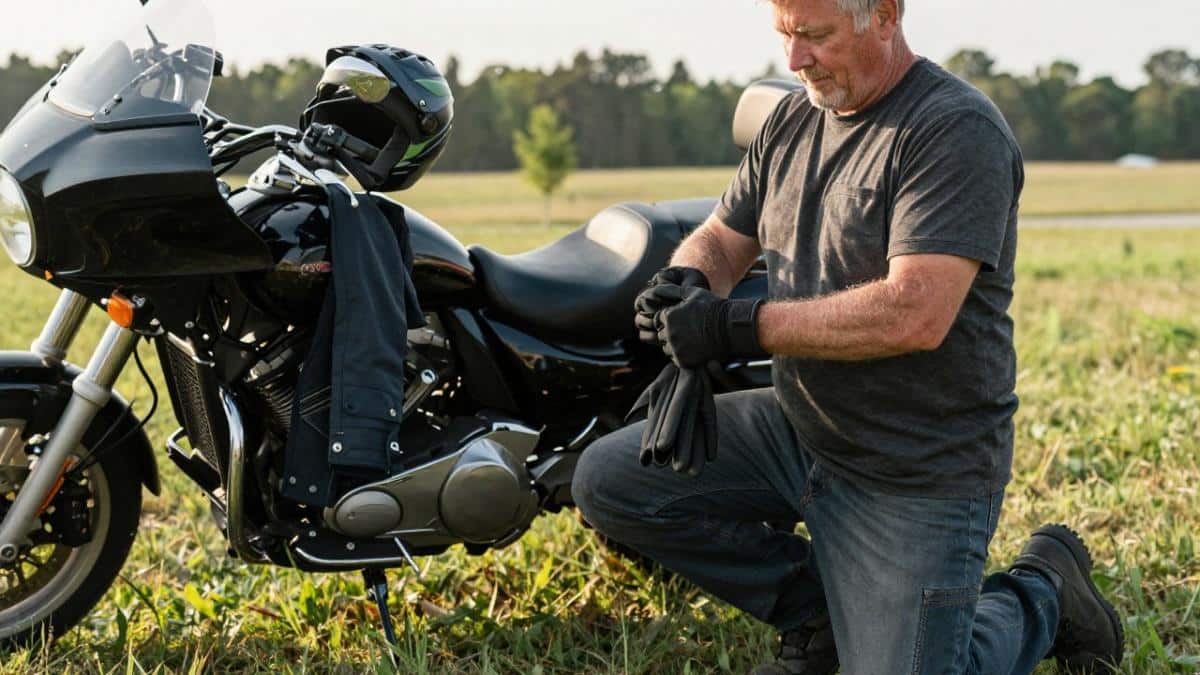
Long-distance motorcycle ride essentials come down to the parts of you that touch the bike and the sky. Boots should cover the ankle, grip the pegs in the wet, and stay comfortable enough to walk in at a fuel stop.
Motorcycle Gear for All-Weather Touring: Layering and Rain Strategy
Motorcycle gear for all-weather touring works on layers, not single garments. The goal is a modular system you can adjust without stopping for long, because on a multi-day ride you will face temperature swings of 30 degrees or more between a cold morning launch and a warm afternoon. Most riders overpack because they treat each condition as a separate problem. A better approach is to build a three-layer stack and then tune it for the climate you will actually ride.
The Three-Layer Stack
Start with a moisture-wicking base layer against your skin. Synthetic or merino wool moves sweat away from your body; cotton holds it and chills you when you stop. Add an insulating mid layer, typically a fleece or lightweight puffy jacket, that traps warmth without bulk. Then your armored shell goes on top. That stack lets you adapt from a 45-degree morning to a 75-degree afternoon by shedding the mid layer and opening vents, without changing everything.
Climate-Specific Setups
Heat and humidity: Prioritize ventilation over insulation. A light-colored textile jacket with large chest and arm vents, a mesh base layer, and a hydration pack you can sip from without stopping.
Cold and altitude: Add a windproof mid layer, a balaclava or neck gaiter, and heated grips or heated gloves.
Rapidly changing conditions (mountain passes, river valleys): The layer you can add or remove fastest wins.
Rain Strategy That Actually Works
Rain gear fails in two ways: it leaks, or it turns into a sauna. A shell that packs small but lacks vents will have you pulling over to strip it off in the middle of a storm. Look for pit zips or back vents on the jacket and full-length side zips on the pants.
For families planning multi-day trips, our guide to the best motorcycle camping gear for families covers how to pair riding kit with camp setup so nothing gets left behind. Riders heading into the river valleys should also read our guide to motorcycle safety in the Midwest river valleys, where changing conditions and sweeping curves demand gear you trust.
Best Motorcycle Gear for Long Distance Riding Men’s Fit Guide
Fit is where good gear quietly fails. The best motorcycle gear for long distance riding men’s sizing gets overlooked because riders buy their street size and hope. Do not.
- Jacket: Reach forward as if gripping the bars. The sleeves should not ride up past your wrists, and the armor should stay over your elbows.
- Pants: Sit on a chair in riding posture. Knee armor should sit on the knee, not above it.
- Boots: Your toes should not jam the toe box when you shift. Try them with the socks you will actually tour in.
- Gloves: Fingertips should not press the ends. Numb fingers on day three usually start with a glove that was a half size short.
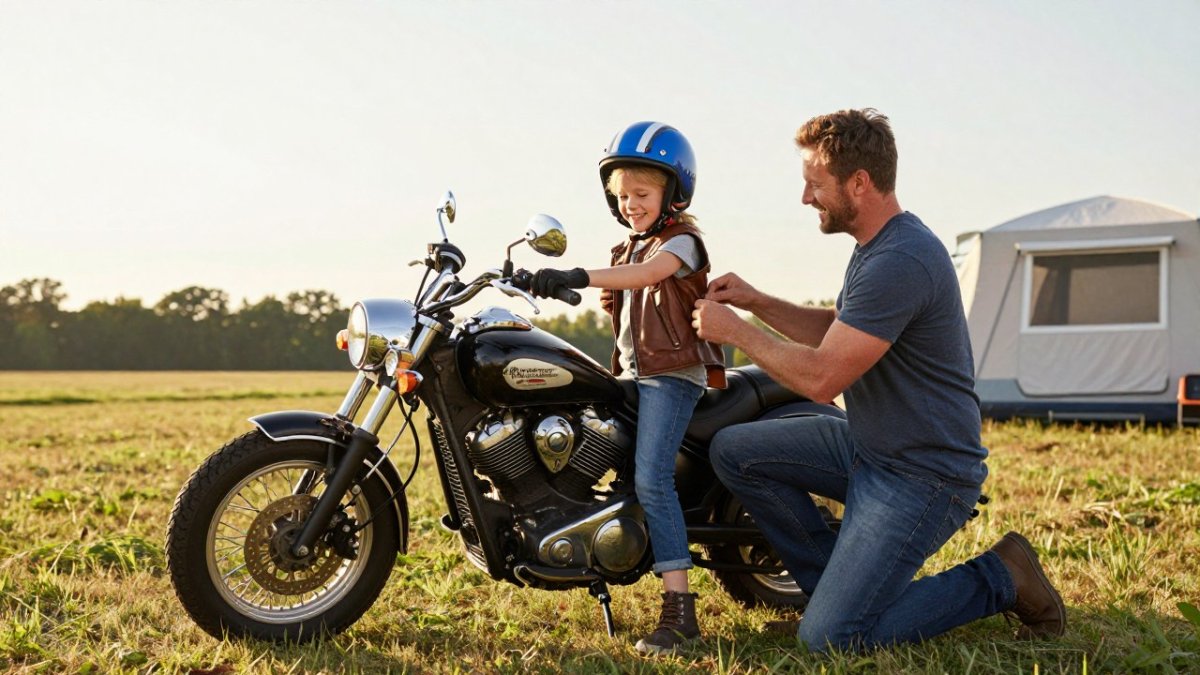
If a young passenger is coming along, our guide on how to choose motorcycle safety gear for children walks through the same fit checks for smaller riders.
Comfort and Fatigue Over Consecutive Riding Days
Fatigue is the gear problem nobody labels as one. A helmet that fits slightly wrong becomes a headache by day two. Gloves that pinch turn into numb hands by lunch. Boots that rub produce a blister that changes how you ride.
Build recovery into the kit. A sheepskin or gel seat pad, earplugs to cut wind noise, and a hydration pack you can sip from without stopping all reduce the load on your body. Plan shorter days early in the trip and longer ones later.
Budget Tiers: What Changes From Entry to Premium
Spending more buys you better materials, better ventilation, and better armor, not a different category of safety. Helmets at different price points can differ in weight, noise, venting, and liner quality. Here is how the tiers usually break down. For current pricing, check Spirit of Indian’s website or request a quote.
| Tier | Helmet | Jacket and Pants | Boots and Gloves | What You Gain |
|---|---|---|---|---|
| Entry | $100-$200 basic full-face, limited vents | $150-$300 textile with basic armor | $100-$200 water-resistant, not waterproof | Core protection at low cost |
| Mid-range | $200-$400 better venting, sun visor, quieter | $300-$600 removable liners, CE-rated armor | $200-$350 waterproof membranes | All-day comfort in mixed weather |
| Premium | $400-$800 lighter shell, premium liner, pinlock | $600-$1,200 laminate shells, upgraded armor | $350-$600 breathable waterproof, better fit | Less fatigue over consecutive days |
What Actually Changes
Helmet: Above entry level you pay for weight reduction, noise control, and vent quality. A premium shell might weigh 3 pounds instead of 4, which matters on day three when your neck is tired.
Jacket and pants: The biggest jump is from coated waterproofing to laminated construction.
Boots and gloves: Entry-level boots are water-resistant, meaning they shed light rain but soak through in a sustained downpour. Mid-range and premium boots use a waterproof membrane and a sole that grips on wet pavement.
A Sensible Allocation
A common pattern is to spend most on the helmet and jacket, then upgrade boots and gloves as your riding miles grow. If you ride mostly in dry summer conditions, an entry-level helmet and mid-range jacket may serve you well. If you ride in rain, cold, or multi-day trips, put your budget into waterproofing and ventilation first. Prices vary widely by brand and season, so check current listings before you commit. Watch out: a deep discount on premium gear can mean old stock with degraded waterproof coatings or expired armor, so check the manufacture date when you can.
Ride It Before the Rally: Testing Your Kit on a Weekend Loop
Never debut new gear on a week-long trip. Before you test the gear, get the bike itself ready with our guide on how to prepare your motorcycle for long distance travel. Then plan the full trip using our 7-step guide to planning a motorcycle rally trip so the test loop mirrors the real thing.
Run this checklist on your shakedown ride:
- Wear the full kit for at least six hours in one day
- Ride through a rain shower or simulate it with a hose test
- Check for hot spots on hands, feet, and shoulders
- Confirm rain gear is reachable without unpacking
- Test layering from a cold morning to a warm afternoon
- Note anything that rubbed, pinched, or leaked, and fix it before the real trip
That is the whole method: protect the core, cover the extremities, layer for weather, fit it properly, and prove it on a short ride before you trust it for a long one. The gear does not make the trip. It just gets out of the way so the trip can happen.
A week on the road rewards preparation, and it rewards good company even more. Spirit of Indian brings riders and their families together at River’s Edge Campground for curated rides through Wisconsin and Minnesota, on-site cabins and tiny homes, live entertainment, and a charity duck race.
Frequently Asked Questions
What gear should I wear for a long-distance motorcycle ride?
Cover five areas: a full-face or modular helmet, a textile jacket with back, shoulder, and elbow armor, riding pants with knee and hip protection, over-ankle boots, and gauntlet gloves. Add a packable rain layer and a mid-layer for cold mornings. Long-distance riding rewards gear that fits well over six hours, not gear that looks best in a showroom. Test everything on a two-hour local loop before a multi-day trip so nothing surprises you on day one.
What are the must-haves for a long motorcycle trip?
Beyond the helmet, jacket, pants, boots, and gloves, pack rain gear that fits over your jacket, a spare visor or pinlock insert, earplugs, a hydration pack, and a small tool kit. Eye protection matters if your helmet visor fogs. High-visibility elements help in low light. Keep on-bike essentials in a tank bag rather than a top case so you can reach them without unpacking. A tire plug kit and a phone mount round out the practical list.
How do I stay comfortable on a long motorcycle ride?
Comfort comes from fit and ventilation more than padding. Wear layers you can add or remove at stops, take a break every 60 to 90 minutes, and keep your core temperature steady. Loose armor that shifts will rub by day three. Seams at the knee and wrist are the usual problem spots. Hydrate before you feel thirsty, and stretch at fuel stops. Small adjustments early prevent the fatigue that builds over consecutive days.
What should I pack for changing weather on a motorcycle trip?
Pack a waterproof over-jacket and over-pants rather than relying on a single jacket for everything, plus a warm mid-layer, a neck gaiter, and waterproof gloves. Mountain passes and afternoon storms can drop temperatures fast. Water-resistant is not waterproof: seams and zips leak in sustained rain. Keep rain gear where you can reach it without opening your main luggage, and test it in a shower at home before you trust it on the road.

0 Comments