
Table of Contents
- Why Families Choose Motorcycle Camping Adventures
- Building Your Motorcycle Camping Checklist
- Selecting the Right Motorcycle Camping Tent
- Sleeping Systems: Bags, Pads, and Comfort
- Motorcycle Luggage for Camping: Packing Smart
- Camp Kitchen and Cooking Gear
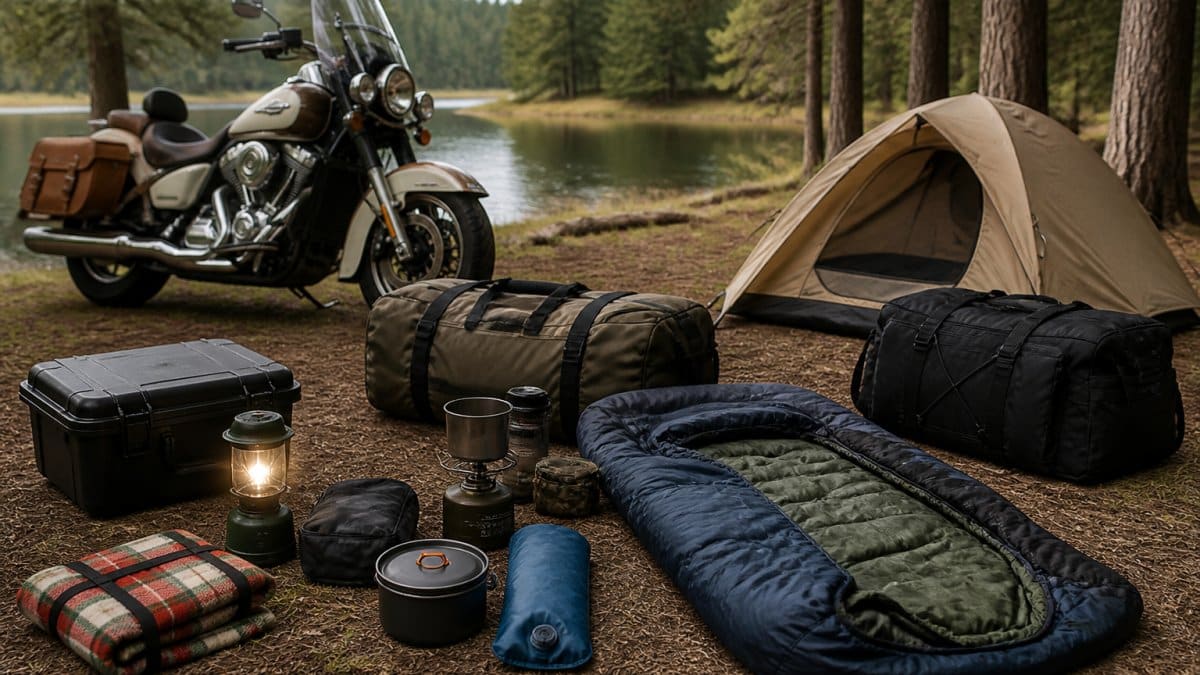
- Complete Motorcycle Camping Gear Kit Essentials
- Conclusion: Ready for Your Family Adventure
- Frequently Asked Questions
Last Updated: October 12, 2026
Why Families Choose Motorcycle Camping Adventures
Motorcycle camping offers something traditional family vacations don’t: adventure, freedom, and quality time together on the open road. When you’re planning a family trip that combines the thrill of riding with outdoor camping, the right gear becomes essential. At Spirit of Indian, we’ve seen families discover that motorcycle camping creates lasting memories while building confidence in young riders and passengers. Preparing for these excursions requires a thoughtful approach to selecting essential camping gear that balances weight constraints with the comfort necessary for a successful journey.
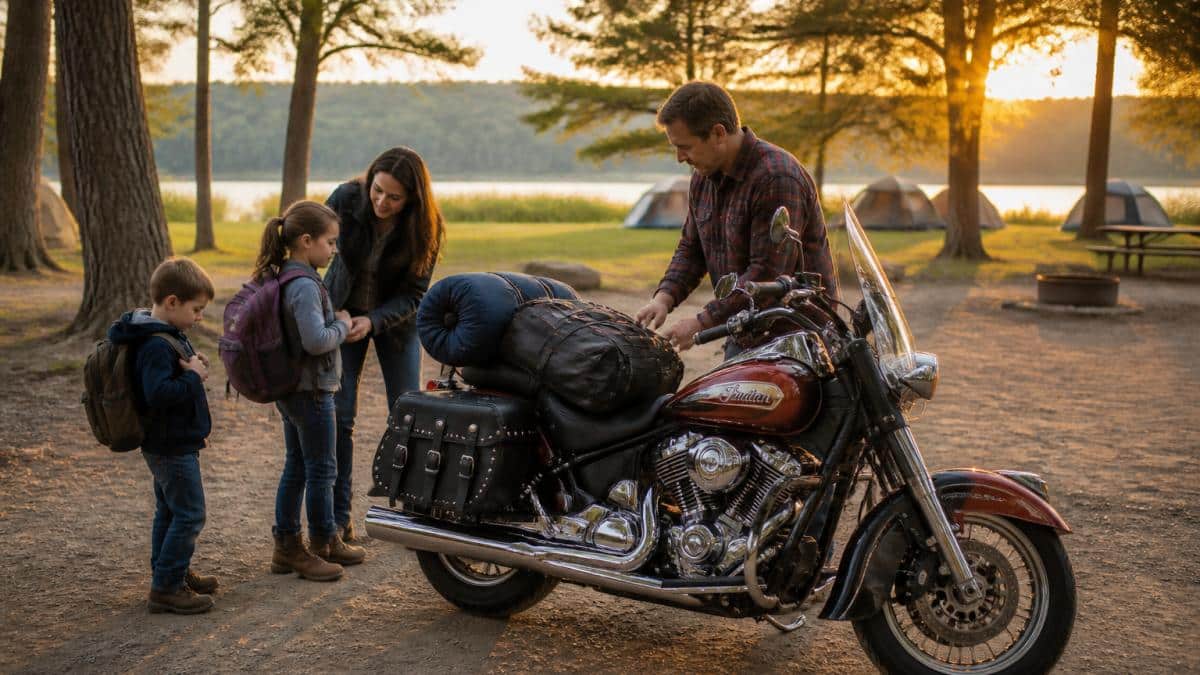
The appeal is real. Families get to explore scenic routes through Wisconsin and Minnesota without the constraints of traditional travel. Kids experience nature directly. Parents find a community of like-minded riders who understand the lifestyle. But success depends on choosing the right 7 best motorcycle camping gear for families, equipment that balances weight, durability, and comfort for multiple riders on a single bike.
This guide covers the essentials you’ll need, from compact sleeping systems to intelligent luggage solutions. We’ll help you understand what works for families specifically, not just solo riders adapting their gear for passengers.
Building Your Motorcycle Camping Checklist
A proper motorcycle camping checklist differs from general camping gear lists because weight, compactness, and load distribution matter far more. Your motorcycle has real limits. Adding 100 pounds of gear changes how it handles, accelerates, and brakes. For families, that means choosing lightweight alternatives and leaving behind items solo campers might bring.
Start by assessing your bike’s carrying capacity. Check your owner’s manual for the maximum weight it can safely carry, including fuel and riders. Subtract the weight of your passengers, then divide the remaining capacity among essential gear categories. This forces prioritization, which is exactly what families need.
The best motorcycle camping checklist prioritizes these categories in order: shelter, sleep system, cooking, luggage, and comfort items. Within each category, you’re looking for gear that serves multiple purposes when possible. A sleeping pad that doubles as insulation and cushioning. A camp stove that uses fuel you already carry. Saddlebags that protect gear while distributing weight evenly.
Many families make the mistake of bringing adult-sized gear for children. A full-size sleeping bag for an 8-year-old wastes capacity. Child-specific gear costs less, weighs less, and fits better. Your motorcycle camping gear kit should include scaled versions for younger riders.
Selecting the Right Motorcycle Camping Tent
Your tent is your shelter from weather and insects. For motorcycle camping, it needs to be compact enough to fit in saddlebags or a top case, yet sturdy enough to handle wind and rain. The best motorcycle camping tent for families balances these demands.
Look for tents with a packed size under 20 inches long and weighing under 5 pounds. Two-person tents work well for one adult and one child. Three-person models accommodate two adults and one child, though they’re heavier. Families with multiple children often use two smaller tents rather than one large one, it distributes weight better and gives everyone more comfort.
Freestanding designs are superior to stake-dependent ones. When you arrive at a campground, you need to set up quickly without searching for suitable ground. A freestanding tent works on gravel, packed dirt, or even pavement. It also moves easily if you discover a better spot after setup.
Material matters for durability. Ripstop nylon resists tears better than standard nylon, and sealed seams prevent water from leaking at stress points. Check that the tent has good ventilation, condensation from breath and body heat can make sleeping uncomfortable, especially with multiple people inside.
Setup time should be under five minutes. After a day of riding, you want shelter fast, not a 30-minute assembly project. Clip-together poles and color-coded connections speed setup significantly.
Sleeping Systems: Bags, Pads, and Comfort
A complete sleeping system includes three layers: a sleeping pad for insulation and cushioning, a sleeping bag for warmth, and a pillow for neck support. Each component matters for comfort on a motorcycle camping trip.
Sleeping pads come in three types: foam, air, and hybrid. Foam pads are lightest and most packable but offer less cushioning. Air mattresses provide comfort but weigh more and risk puncture. Hybrid pads combine both, closed-cell foam inside an inflatable shell.
Temperature rating on sleeping bags is critical. Check the lowest temperature your campground experiences during your trip, then choose a bag rated 10-15 degrees lower. A bag rated for 20 degrees keeps you warm in 35-degree nights.
Children need appropriately sized sleeping bags. Adult bags on small riders create cold pockets where heat escapes. Child-specific bags fit properly and weigh significantly less.
Pillows are often overlooked but affect sleep quality dramatically. Compressible camping pillows pack down to the size of a water bottle. They cost little and weigh almost nothing, yet they prevent neck strain that makes the next day’s ride uncomfortable.
Consider a sleeping system that lets you adjust warmth by adding or removing layers. Two lightweight bags can zip together for couples, or you can use one bag with a liner for extra insulation.
Motorcycle Luggage for Camping: Packing Smart
Luggage capacity is your constraint. Unlike car camping where you can bring everything, motorcycle camping requires ruthless prioritization. The right luggage system makes this possible.
Saddlebags are the foundation. Hard cases protect gear better than soft bags but weigh more and reduce maneuverability. Soft saddlebags are lighter and more packable but offer less protection.
Load distribution is critical for handling. Heavy items belong low and centered, near the rear wheel and between the frame rails. Lighter items go on top. This keeps the bike’s center of gravity low and stable. A poorly loaded bike becomes twitchy and dangerous, especially with a passenger.
Tank bags hold items you need during the ride: maps, snacks, sunscreen, first aid supplies. They typically hold 5-8 liters and mount to the fuel tank with magnetic or strap attachments. For families with children, tank bags keep entertainment items accessible without stopping.
Soft luggage racks and bungee cords let you expand capacity when needed. A dry bag strapped to the seat can hold extra clothing or camping supplies. Just keep the total weight reasonable and well-distributed.
Label everything. On a week-long trip, you’ll forget what’s in which bag. Waterproof labels on saddlebags help you find items without unpacking everything. This matters especially with children who need specific gear for different activities.
Camp Kitchen and Cooking Gear
Cooking on a motorcycle camping trip means lightweight, efficient equipment. A full camping kitchen isn’t realistic. Instead, choose a minimal setup that produces hot meals.
Compact camp stoves are essential. Canister stoves that burn butane or propane weigh under 4 ounces and pack into a pouch. They boil water in minutes. Liquid fuel stoves (white gas) perform better in cold weather but are heavier and more complex.
Cookware should be minimal: one pot and one pan. Nesting designs save space. Non-stick coatings help with cleanup. Aluminum heats quickly and weighs little. Cast iron is durable but heavy, skip it for motorcycle camping.
Utensils and dishes can be single-purpose items shared by the family. Lightweight plastic plates and bowls cost little and pack small. Sporks (spoon-fork combinations) replace two utensils with one. A small cutting board and knife handle food prep.
Water storage is critical. Collapsible containers weigh almost nothing when empty and expand to hold several gallons when full. A 2-3 gallon capacity lets you cook and clean without finding water constantly.
Fuel storage needs care. Keep fuel containers separate from food and sleeping areas. Never store fuel inside a tent. Many campgrounds have restrictions on fuel storage, check before you arrive.
Meals should be simple: one-pot pasta, rice dishes, or soups. Bring ingredients that don’t require refrigeration. Dried foods, canned goods, and shelf-stable items reduce weight and complexity.
Complete Motorcycle Camping Gear Kit Essentials
Beyond sleeping and cooking, several items complete a functional motorcycle camping setup. These essentials address safety, comfort, and practicality.
First aid kits should be motorcycle-specific. Include bandages, antibiotic ointment, pain relievers, and blister treatment. Add any medications family members need regularly. Tape and elastic bandages help with minor injuries.
Tools and repair supplies are non-negotiable. A basic toolkit with wrenches, screwdrivers, and pliers handles most roadside issues. Spare chain lubricant, a spare brake cable, and patches for tires address common problems.
Lighting matters for safety and camp comfort. A headlamp lets you navigate camp after dark without disturbing others. A lantern hanging from your tent provides ambient light.
Weather protection goes beyond rain gear. Windbreakers and layers for adults help manage temperature changes during long rides. Children need extra protection, their bodies lose heat faster.
Communication devices keep families connected and safe. A satellite communicator lets you reach help from remote areas where cell service doesn’t exist.
Entertainment items reduce boredom for children during downtime. Lightweight books, card games, or a tablet with downloaded movies occupy kids during rest days. This keeps morale high through a week-long trip.
Documentation should include insurance cards, registration, and emergency contact information. Keep copies in multiple locations, your wallet, the bike’s storage, and one person’s backpack. This protects you if something happens to one document.
Conclusion: Ready for Your Family Adventure
Motorcycle camping transforms how families experience travel. The right 7 best motorcycle camping gear for families makes the difference between a memorable adventure and an uncomfortable ordeal. Start with shelter, sleeping systems, and luggage, the fundamentals. Add cooking capability and safety items. Test your setup on short trips before committing to a full week.
Spirit of Indian brings families together through shared passion for riding and the open road. Whether you’re planning your first motorcycle camping trip or your tenth, the community at our events includes experienced families who’ve refined their gear choices through real-world experience. Join us at River’s Edge Campground to connect with riders who understand family motorcycle adventures, participate in guided rides through scenic Wisconsin and Minnesota routes, and discover how the right preparation makes every mile more enjoyable.
Motorcycle camping works best when families prepare thoughtfully. The gear you choose determines comfort, safety, and how much you actually enjoy the experience. The community of motorcycle enthusiasts, including families at events like Spirit of Indian’s family-friendly rally, shares experiences and advice that help newer families avoid common mistakes. Research from American Motorcycle Association safety guidelines emphasizes that proper gear and preparation reduce risk significantly. When you’re ready to test your setup with other families and experienced riders, family motorcycle camping resources connect you with communities that welcome newcomers and celebrate the lifestyle together.
Frequently Asked Questions
What is the best motorcycle camping gear kit for a family?
A complete motorcycle camping gear kit includes a compact tent rated for your climate, sleeping bags with appropriate temperature ratings, insulated sleeping pads, a portable camp stove, cookware, water storage containers, and weatherproof luggage. The best kit balances weight, durability, and packability on your motorcycle. Prioritize gear that fits your bike’s load capacity and your family’s comfort needs. Look for compact, lightweight options designed specifically for motorcycle travel rather than standard car camping equipment.
How do you pack camping gear on a motorcycle for multiple passengers?
Distribute weight evenly using saddlebags on both sides and a top rack or tail bag. Keep heavy items low and centered. Pack essentials (tent, sleeping bags) in hard cases or waterproof soft luggage to protect against road debris and weather. Secure everything with compression straps. For families, assign each person a lightweight backpack for personal items. Test your load balance before your trip and ensure total weight stays within your motorcycle’s manufacturer specifications.
What camping gear works best for a family traveling by motorcycle?
Choose lightweight, packable gear: a 3-4 person tent that sets up quickly, sleeping bags in multiple sizes for different ages, compact sleeping pads for insulation, a portable camp stove with minimal fuel consumption, and collapsible cookware. Soft luggage and saddlebags maximize space without adding weight. Include child-friendly items like a camping pillow and age-appropriate sleeping gear. Select gear rated for the climates you’ll encounter and test it before your trip to ensure your family is comfortable.
How do you choose a motorcycle camping tent for families?
Look for a tent that’s compact when packed but spacious when set up. A 3-4 person capacity works for most families with young children. Choose one with a low profile to reduce wind resistance while riding. Ensure it has good ventilation to prevent condensation and includes a rainfly for weather protection. Weight matters on a motorcycle, so target under 5 pounds. Set it up at home first to confirm it fits your packing space and your family can assemble it quickly at camp.

0 Comments