
Table of Contents
- Book Your Motorcycle Rally Camping Reservations Early
- Choose Your Lodging: Tent, RV, Cabin, or Dry Camping
- Create a Motorcycle Camping Checklist Before You Go
- Motorcycle Camping Safety Tips and Security
- Plan Your Motorcycle Rally Lodging Budget
- Prepare for Weather, Water, and Campground Facilities
- Select Your Campsite and Plan Your Daily Riding Schedule
- Frequently Asked Questions
Last Updated: October 17, 2026
Book Your Motorcycle Rally Camping Reservations Early
Booking your motorcycle rally camping spot early is non-negotiable if you want a good location and the lodging style you prefer. Most popular campgrounds fill weeks or even months before the event. At Spirit of Indian, we recommend securing your reservation as soon as dates are announced.
Campgrounds with the best amenities, closest proximity to main attractions, and safest layouts disappear first. Early bookers get level ground, shade, and proximity to facilities; late bookers get what’s left.
Identify which lodging type fits your needs and budget, then contact the campground directly or check its website for availability. Many require a deposit to hold your spot, and some enforce multi-night minimums during rally week.
Pro tips for early booking:
- Set a calendar reminder for when reservations open
- Have your payment method ready
- Book for the full week if possible, partial weeks often cost more per night
- Ask about cancellation policies in case plans change
- Confirm that your reservation includes parking space for your motorcycle
Contact the campground early to ask about group discounts if you’re bringing multiple riders. Some facilities offer reduced rates for groups of 5 or more, which can add up to real savings across your crew.
Choose Your Lodging: Tent, RV, Cabin, or Dry Camping
Your lodging choice shapes your entire rally experience. Each option has tradeoffs between comfort, cost, and the camping feel you’re after.
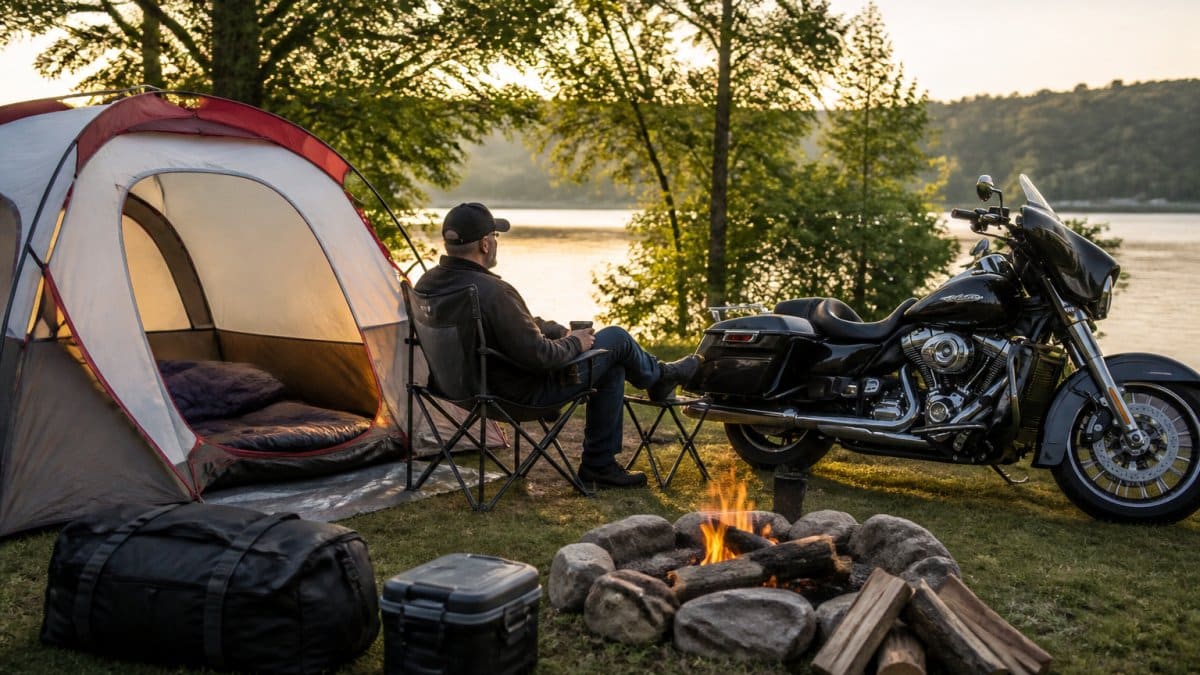
Tent camping puts you closest to the action and community, you’ll wake to other riders and build friendships fast. The downside: weather exposure, a full tent setup to pack, and no electricity or running water nearby.
RV sites offer comfort and convenience, your own bathroom, kitchen, climate control, and storage. Many riders prefer this for multi-day events because you can retreat to comfort when weather turns bad.
Cabins and tiny homes split the difference. You get a roof, a bed, and basic shelter without the full RV cost.
Dry camping means sleeping in a tent or under a canopy on a designated patch of ground with no hookups. It’s the most affordable option and works well for riders who travel light and don’t mind basic conditions.
Choose based on weather tolerance and budget, not just preference. If the forecast shows rain all week, a cabin or RV becomes worth the extra cost. If you’re on a tight budget and the forecast is clear, tent camping saves hundreds.
| Lodging Type | Best For | Weather Protection | Cost Level |
|---|---|---|---|
| Tent Camping | Community-focused riders | Low | Low |
| Dry Camping | Budget-conscious travelers | Very Low | Very Low |
| RV Site | Multi-day comfort seekers | High | High |
| Cabin/Tiny Home | Families and comfort seekers | High | Medium |
Create a Motorcycle Camping Checklist Before You Go
A solid motorcycle camping checklist keeps you from forgetting essentials and helps you pack efficiently on a bike with limited space. Write down everything you’ll need and check it twice before leaving home.
Essential Gear for Motorcycle Camping
Your core gear list starts with shelter, sleep system, and clothing. These items are non-negotiable for any motorcycle rally camping trip.
Shelter and sleep system:
- Lightweight tent (2-3 person, designed for quick setup)
- Sleeping bag rated for the season
- Sleeping pad or foam mat for insulation
- Ground tarp to protect tent bottom
Clothing and personal items:
- Rain jacket and rain pants
- Extra socks and underwear (at least 3 pairs)
- Warm layer for cool mornings
- Sturdy boots for walking around campground
- Toiletries and medications
- Sunscreen and insect repellent
- Headlamp or small flashlight with extra batteries
Cooking and eating:
- Lightweight camp stove or portable grill
- Fuel canister for stove
- Pot, pan, and utensils
- Plates, bowls, and cups
- Cooler with ice or ice packs
- Basic food items and snacks
- Water bottles or hydration system
Safety and tools:
- First aid kit
- Multi-tool or knife
- Duct tape and rope
- Basic motorcycle repair tools
- Phone charger or portable battery pack
Packing and Load Management on Your Bike
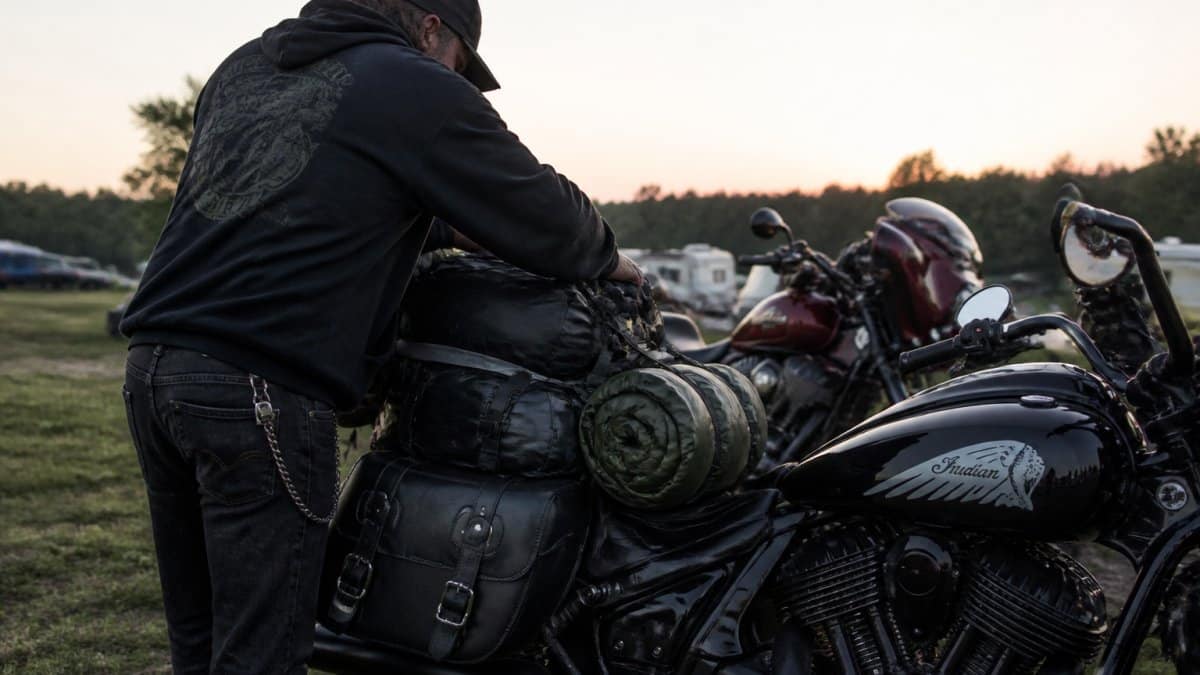
Packing for a motorcycle requires a different mindset than packing for a car trip: carrying capacity is limited, and weight distribution affects handling and safety.
Check your owner’s manual for maximum load limits, then distribute weight evenly between saddlebags rather than loading it all on the rear. Heavy items go low and centered; lighter items go higher.
Use compression bags for bulky items like sleeping bags and jackets, roll clothes instead of folding them, and wear your heaviest gear while riding to reduce what you pack.
Secure everything with bungee cords or cargo nets. Nothing should shift during a hard stop or turn. Test your load at slow speeds in a parking lot before hitting the road.
Overloading your motorcycle or packing unevenly can cause handling problems, increase stopping distance, and make sharp turns difficult. Test your setup before the rally week starts. An unstable bike puts you and other riders at risk.
Motorcycle Camping Safety Tips and Security
Safety on a motorcycle rally camping trip means personal security at the campground plus smart riding practices on daily rides.
At the campground:
- Park your bike where you can see it from your tent or cabin
- Use a sturdy lock or chain to secure your bike to a fixed object
- Don’t leave valuables unattended in your tent or cabin
- Keep your keys and important documents on you at all times
- Get to know your neighboring campers, community awareness is your best defense
- Avoid walking alone late at night; buddy up with other riders
During daily rides:
- Ride sober and well-rested
- Wear full protective gear every ride, no exceptions
- Check your bike’s tire pressure and fluid levels each morning
- Ride at speeds you can control on unfamiliar roads
- Use the buddy system, ride with at least one other person
- Know your route before you leave camp
- Carry a phone and tell someone where you’re going Equipping your motorcycle with reliable navigation and emergency tools ensures you remain prepared for any roadside challenge, so consider how these top outdoor gadgets can enhance your safety and self-sufficiency while touring.
Many rally campgrounds have security patrols or ranger presence, ask when you book. Some have gated entrances or require check-in after dark, which adds peace of mind, especially for families.
Plan Your Motorcycle Rally Lodging Budget
Most rally budget advice stops at the nightly campsite rate, but that’s only one line in a longer ledger. A realistic rally budget has five buckets: lodging, fuel, food and drink, rally fees and supplies, and a contingency reserve.
Fuel. Estimate round-trip miles plus daily riding miles, divide by your bike’s realistic mpg (loaded, two-up, and in heat, expect lower than solo commuting), and multiply by the current per-gallon price.
Food and drink. Cooking at camp is the biggest lever: roughly $15-$25 per person per day for groceries versus $40-$60 eating at rally vendors and restaurants. Bring shelf-stable breakfasts and coffee so you’re not buying $6 coffee every morning.
Contingency reserve. Set aside 15-20% of the total for a tow, a tire, a missed night, or a weather-driven hotel stay. Rally weeks are exactly when a small mechanical problem becomes an expensive one.
Build a simple spreadsheet with five columns, lodging, fuel, food, fees/supplies, contingency, and fill it in before you book. Compare at least two lodging types on total trip cost, not nightly rate. A cabin that sleeps four can beat four tent sites once per-person fees and shower tokens are counted.
Recreation.gov reservation fees and cancellation policies
Prepare for Weather, Water, and Campground Facilities
Rally week weather is the variable you cannot book around, and campground facilities are the variable most riders under-research. Treat both as planning problems with concrete answers.
Severe weather contingency. Check the National Weather Service forecast each morning and before any afternoon ride, and know the difference between a watch (conditions favorable) and a warning (take shelter now).
Water. Ask whether potable water is available at sites or only at a central spigot, and whether it’s tested.
Sanitation and showers. Confirm before booking: number of shower stalls, hours, coin-operated versus free, dishwashing sink availability, and flush versus vault toilets.
Fire safety. Use only designated fire rings, keep a water bucket or extinguisher within reach, and never leave a fire unattended.
Do not wait for a warning to look for shelter. Locate the storm shelter and the camp office on your first walk-through, and tell a riding buddy where you will be if a storm hits while you are out.
National Weather Service watches and warnings
Select Your Campsite and Plan Your Daily Riding Schedule
Once you arrive, walk the grounds before dark and look for level ground, good drainage, and proximity to facilities.
Campsite selection tips:
- Avoid low spots where water pools during rain
- Choose sites with natural shade from trees
- Stay away from dead branches overhead that could fall
- Select a spot with clear sightlines to neighboring campers
- Ensure adequate space for tent setup and gear organization
Planning daily rides:
- Check weather and road conditions each morning
- Decide on your route and destination before leaving camp
- Estimate travel time and plan fuel stops
- Ride with a group or tell someone your planned route
- Set a time to return to camp
- Know where to get fuel, food, and water along your route
Many rally events offer organized group rides with set routes, designated stops, and experienced guides, safer than solo riding in unfamiliar territory and a good way to meet other riders.
First-time rally attendees should join at least one organized group ride. You’ll learn the area, meet people, and get a feel for the riding conditions without navigating alone.
Attending a motorcycle rally camping event like Spirit of Indian offers something special: a week surrounded by fellow riders who share your passion for the open road. Booking early, packing smart, planning your budget, and preparing for weather sets you up for a rally week you’ll remember. Our team has designed the week to welcome first-timers and seasoned riders alike, with guided rides through scenic Wisconsin and Minnesota roads, family-friendly lodging at River’s Edge Campground, and activities that bring the community together. Start planning today, Join Us and experience the camaraderie and adventure that define our rally.
Frequently Asked Questions
How far in advance should you book motorcycle rally camping?
Book your motorcycle rally camping reservations at least 2-3 months ahead, especially for popular events and peak weeks in August. Many campgrounds impose multi-night minimums and fill quickly during rally season. Early booking secures your preferred lodging type, tent site, RV spot, cabin, or dry camping, and often locks in better rates. Waiting until the last minute limits your options and may force you into higher-priced accommodations or campgrounds farther from rally attractions.
What are the must-haves for a motorcycle camping checklist?
Essential items include a sleeping bag rated for the season, a tent or rain cover, a camping mat or pad, a water bladder or bottles (at least 2 liters capacity), a headlamp, a multi-tool, first-aid supplies, weather-appropriate clothing layers, and a reliable motorcycle lock. Add a small camp stove or portable cooler for food, a phone charger, and basic toiletries. Don’t forget rain gear and a level ground tarp, uneven or rocky ground causes discomfort and can damage gear. Organize everything in compact saddlebags or a top box to avoid overloading your bike.
What are the best motorcycle camping safety tips?
Keep your motorcycle and gear secure by using a heavy-duty cable lock on your bike and securing valuable gear in your cabin or locked storage. Choose a level, well-lit campsite away from crowded areas when possible. Store cash and documents in a waterproof pouch, and keep a copy separate from the originals. Travel with a buddy or let someone know your daily riding schedule. Carry a fully charged phone, basic tools, and spare fuel. Be aware of weather changes and have a contingency plan for severe rain or heat. Stay hydrated and avoid riding exhausted, fatigue increases accident risk.
How do you choose a campsite for a motorcycle rally?
Select a level campsite away from drainage areas to avoid standing water during rain. Look for spots close enough to main attractions and rally activities to minimize daily riding but far enough to escape peak crowds. If tent camping, avoid rocky or uneven ground, a level site prevents gear damage and improves sleep quality. Check water source proximity and campground amenities like showers and fuel stops. For first-time attendees, choosing a campground within 5-10 miles of rally headquarters balances convenience with a quieter atmosphere. Ask the campground staff for recommendations based on your priorities.

0 Comments