
Table of Contents
- Why Scenic Group Rides for Enthusiasts Are Worth the Commitment
- Wisconsin Motorcycle Routes That Reward a Full Day in the Saddle
- Motorcycle Ride Distance and Duration: How to Match the Route to Your Group
- Your Motorcycle Ride Planning Checklist for Stress-Free Group Rides
- Motorcycle Group Riding Safety Tips Every Enthusiast Should Know
- How to Find and Verify Scenic Group Rides Near You
- What Makes Spirit of Indian a Standout Week of Scenic Group Rides
- Conclusion: Ride Together, Discover More
- Frequently Asked Questions
Last Updated: October 16, 2026
Why Scenic Group Rides for Enthusiasts Are Worth the Commitment
Scenic group rides for enthusiasts are organized motorcycle outings where riders travel a planned route together at a relaxed pace, with stops for scenery, food, and conversation.
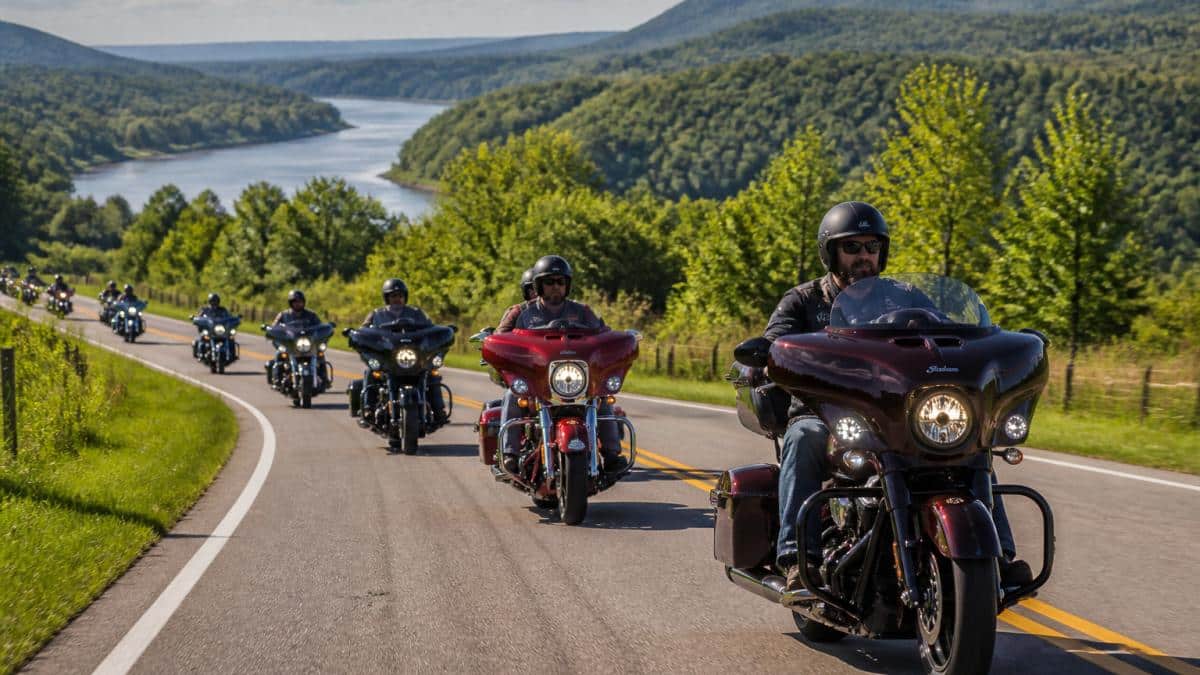
When you ride with others, the route matters less than the people you share it with.
Below, we break down why these rides reward the commitment, which Wisconsin motorcycle routes deliver the best scenery, and how to plan a ride your whole group will actually enjoy.
Wisconsin Motorcycle Routes That Reward a Full Day in the Saddle
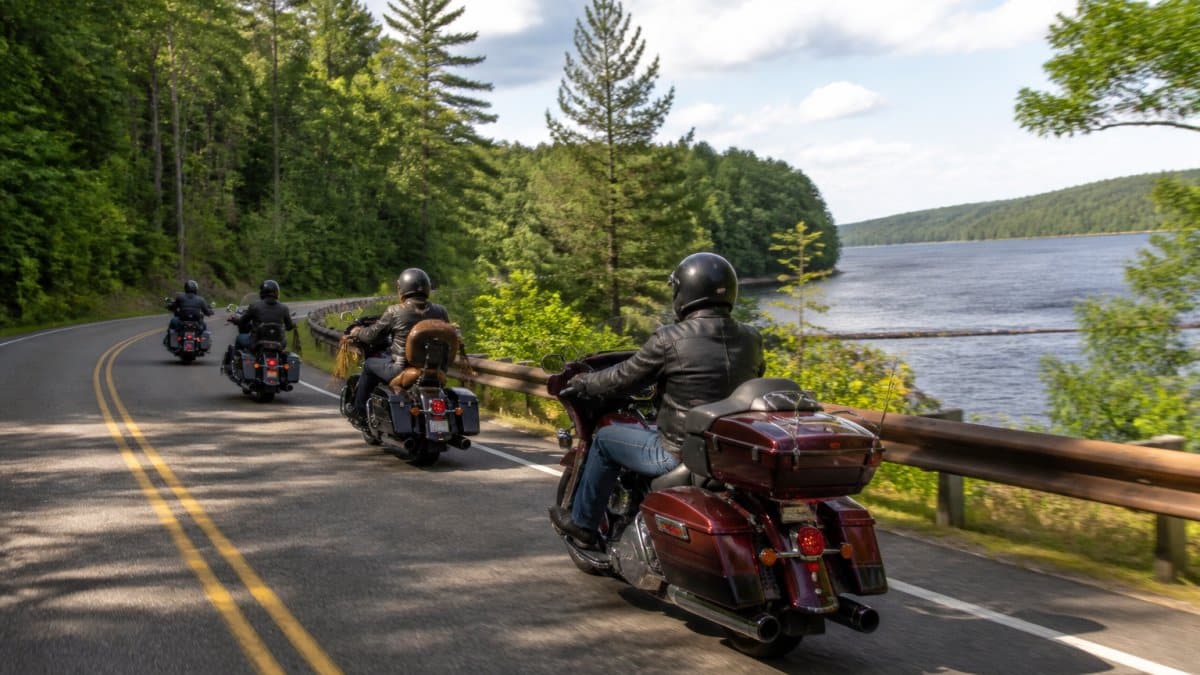
Wisconsin motorcycle routes earn their reputation through variety: river valleys, ridge roads, and small-town main streets that reward a full day of riding.
Closer to the Twin Cities metro, the St. Croix River valley offers a shorter but still rewarding loop.
Most route lists stop at the name and a sentence, which is not enough to plan a group ride, the group has to agree on distance, pace, and surface before anyone leaves the driveway.
| Route | Approx. Distance | Saddle Time | Surface | Best Season | Group Fit |
|---|---|---|---|---|---|
| Great River Road (Highway 35) | 200-250 miles | 5-6 hours | Paved two-lane, some chip seal | Late spring-fall | Intermediate to experienced |
| Highway 60 through the driftless region | 120-160 miles | 3-4 hours | Paved two-lane, low traffic on weekdays | Late spring-early fall | Mixed experience |
| Wildcat Mountain loop | 90-130 miles | 2.5-3.5 hours | Paved, tight switchbacks and ridge grades | Early fall for color | Intermediate; tight turns punish new riders |
| St. Croix valley crossings | 60-90 miles | 2-3 hours | Paved, river-grade with bridge crossings | Spring-fall | Beginners and families |
A few notes that the table cannot hold:
- Great River Road (Highway 35): follows the Mississippi through bluff country, with river views for most of the ride. The bluff grades are gentle but constant, so a smaller-displacement bike will work harder than the distance suggests.
- Highway 60 through the driftless region: rolling farmland, spring-fed valleys, and low traffic on weekdays. Weekend traffic near tourist towns can double your saddle time.
- Wildcat Mountain loop: tight turns and ridge views, best in early fall. The switchbacks are the reason to ride it and the reason to leave newer riders at the back with a sweep.
- St. Croix valley crossings: a shorter loop for riders who want scenery without a full-day commitment. Two bridge crossings mean two chances to regroup if the group strings out.
Timing matters as much as the route. Late spring through early fall gives the most reliable weather, and the driftless region’s fall color draws riders from across the Midwest. Weekday rides mean fewer cars.
Match the route to the shortest-range bike and the least experienced rider, not the fastest. A 90-mile loop that everyone finishes together beats a 250-mile day that splits the group by noon.
Motorcycle Ride Distance and Duration: How to Match the Route to Your Group
Motorcycle ride distance and duration should match the least experienced rider in your group, not the fastest. A route that feels easy for a seasoned rider can wear out someone newer by mid-afternoon, and that is when mistakes happen.
A practical way to plan: assume a 40 to 50 mph average once you account for stops, fuel, and traffic. A 150-mile route takes roughly three to four hours of saddle time before meal breaks; a 250-mile day stretches to six or more hours, which is a lot for a mixed group.
| Group Type | Suggested Distance | Saddle Time | Stop Frequency |
|---|---|---|---|
| Mixed experience, families | 80-120 miles | 2-3 hours | Every 45-60 minutes |
| Intermediate riders | 150-200 miles | 4-5 hours | Every 60-75 minutes |
| Experienced, full-day riders | 250-300 miles | 6-8 hours | Every 90 minutes |
Plan your fuel stops around the smallest tank in the group, not your own. On a mixed ride, that is usually a smaller cruiser or a bike running a reserve. Building stops around the shortest range keeps the whole group together and removes the stress of someone running dry.
Your Motorcycle Ride Planning Checklist for Stress-Free Group Rides
A motorcycle ride planning checklist turns a good idea into a ride that happens smoothly. Most group ride problems trace back to something never agreed on before kickstands went up.
- Confirm the route, distance, and expected duration in writing before the ride
- Set a meeting point with a clear address and a departure time
- Name a ride leader and a sweep rider for the back of the pack
- Agree on a pace and a regrouping plan if the group splits
- Check fuel range across all bikes and plan stops around the shortest
- Review the weather forecast the morning of the ride
- Share a route file or printed directions with every rider
- Confirm who is carrying a basic tool kit and first-aid supplies
The regrouping plan is the item most groups skip and the one that causes the most frustration. Agree in advance that the leader slows at every major turn and the sweep rider stays last. Nobody gets left behind or feels pressured to ride faster than they want.
Motorcycle Group Riding Safety Tips Every Enthusiast Should Know
Motorcycle group riding safety tips come down to spacing, communication, and riding your own ride. The staggered formation, where riders alternate left and right within the lane, gives everyone room to see and be seen without spreading the group across the road.
Keep at least a two-second gap to the rider ahead, more in wet conditions. Pass only when the rider ahead signals it is clear, and never pass within the group unless the leader has set that expectation.
A few habits that prevent most problems:
- Ride your own pace, even if it means falling back
- Use hand signals for turns, hazards, and stops, since not every bike has a working radio
- Check mirrors before every lane change, and signal early
- Never ride directly beside another bike for long stretches
- Take a break before you feel tired, not after
The most common mistake new group riders make is trying to keep up with a faster rider ahead. That single habit causes more close calls than road conditions or traffic. If the group is pulling away, let them. A good ride leader will regroup at the next turn, and riding beyond your comfort level is never worth the risk.
How to Find and Verify Scenic Group Rides Near You
Finding scenic group rides near you starts with local clubs, dealership events, and regional rally calendars. The challenge is verifying a listed ride is current, well-organized, and suited to your experience level. Most forum posts and social listings do not say when they were last confirmed, so a ride that looks perfect may have happened two seasons ago.
Start with organized events rather than informal meetups. A structured event typically publishes its route, pace, and meeting points in advance, telling you exactly what you are signing up for. Local Indian Motorcycle Riders Groups and regional riding clubs are good sources, and dealership bulletin boards still work surprisingly well.
A five-point verification check
Before committing a Saturday to a ride, run it through these five checks. If a listing fails two or more, treat it as unconfirmed until the organizer answers.
- Date freshness: does the listing show a date within the current riding season, or a “last updated” stamp? A listing with no year is a red flag.
- Named organizer and contact: is there a person or club you can reach, not just an event title? A phone number or active email is better than a social handle that has not posted in months.
- Published route specs: distance, surface, pace, and meeting point should all be stated. If the listing says “scenic ride, all welcome” and nothing else, ask for the route file before you go.
- Registration or RSVP status: does the organizer confirm you are on the list, or is it a show-up-and-hope event? For larger rides, a confirmed headcount usually means the organizer has planned fuel and food stops.
- Weather and closure check: the morning of the ride, confirm the route is open. Seasonal road closures, construction, and flooding can shut down a scenic route with no notice.
Where to look, in order of reliability
- Club and dealer calendars: the most current, because the organizer has a reason to keep them updated.
- Regional rally and event pages: good for multi-day events with published schedules.
- Local shop and dealership bulletin boards: still useful, especially for smaller weekly rides.
- Social media groups and forums: highest volume, lowest reliability. Use them to discover a ride, then verify it through one of the sources above.
If you cannot verify it
A quick call or message to the organizer usually settles it. Ask three questions: Is the ride happening on this date? What is the route and pace? Who is leading? Clear answers mean you are good to go; vague ones mean skip it and find another ride. There is no shortage of scenic routes, only of well-organized groups.
The most common trap is a listing that looks active because it has recent comments, but the ride itself has not run in a year. Comments are not confirmation. A named organizer with a current date is.
What Makes Spirit of Indian a Standout Week of Scenic Group Rides
Spirit of Indian is a week-long motorcycle rally built for Indian Motorcycle enthusiasts at River’s Edge Campground in New Richmond, Wisconsin.
The event centers on guided rides through the scenic roads of Wisconsin and Minnesota, planned so riders of different experience levels can take part.
What sets it apart is the mix. Ride every day, or ride some days and spend others at camp. Non-riders have activities and entertainment rather than an empty cabin.
If larger rallies have felt overwhelming, this is a different pace, built for riders who want the scenery, the company, and a week that feels like a vacation rather than a crowd.
Conclusion: Ride Together, Discover More
Planning a week of scenic group rides takes more coordination than a solo trip, and that is exactly what makes it worth doing.
Spirit of Indian brings that together in one place: guided rides through Wisconsin and Minnesota, family-friendly lodging at River’s Edge Campground, live entertainment, a charity duck race, and a Best in Show competition for the builders in the crowd.
Join Us at Spirit of Indian and spend a week riding the roads you have been meaning to explore, with the people who make them worth the trip.
Frequently Asked Questions
What makes a good scenic group motorcycle ride?
A good scenic group ride balances three things: a route with natural scenery and manageable traffic, a pace that keeps the group together, and a clear plan for stops and fuel. Look for routes with low-pressure roads, medium pace, and a ride leader who communicates the plan before kickstands up. Group size matters too; smaller groups of 8-12 riders are easier to manage than large packs. Scenic group rides also work best when the route matches the fitness and experience level of everyone involved.
How do you find motorcycle group rides near you?
Start with local clubs, dealership ride boards, and regional rally calendars. Ask other riders in your area which groups welcome new members and what their typical pace and distance look like. For a week-long option, check the Spirit of Indian rally schedule for guided rides through scenic Wisconsin and Minnesota roads. Always verify current event dates and meeting points directly with the organizer before you commit, and confirm whether the ride is open to all makes or specific to one brand.
What are some scenic motorcycle routes in Wisconsin?
Wisconsin offers a range of routes for enthusiasts, from river-hugging roads along the St. Croix and Mississippi to winding farm-to-forest stretches in the Driftless Area. Many group rides start near New Richmond and head east toward the Chippewa Valley or north toward lake country. Road conditions and traffic vary by season, so check locally before you ride. A good Wisconsin motorcycle route mixes natural scenery, small-town stops, and enough distance to make the day feel worthwhile.
What should you bring on a group motorcycle ride?
Pack a motorcycle ride planning checklist: a helmet, gloves, eye protection, rain gear, water, snacks, a basic tool kit, tire pressure gauge, and a charged phone with a mount. Bring your license, insurance, and registration. If the ride is long, carry a small first-aid kit and know your fuel range. For group rides, a printed or downloaded route map helps if GPS fails. Confirm meeting point, kickstands-up time, and ride leader contact before you leave.

0 Comments