
Last Updated: October 30, 2026
Quick Summary
Rally packing tips help riders find the balance between enough gear for several comfortable days and a bike that still handles well. Pack less, choose versatile layers, and build a tiered list that scales to your trip. Load heavy items low and centered, and secure bags with two straps each.
- Pack versatile gear, such as a jacket that handles both chilly mornings and light rain.
- Build your list in three tiers: must-haves, clothing and camp by trip length, and weather-dependent extras.
- Keep event passes printed, since a dead phone battery or weak signal can block gate entry.
- Use two cam-lock straps per bag, since single straps let bags pivot and bungees stretch in heat.
- Keep the tail light and stay under the bike’s rated carrying capacity, including rider and luggage.
Table of Contents
- Why Packing Well Matters at a Motorcycle Rally
- Tip 1: Pack Less and Choose Versatile Gear
- What to Wear to a Motorcycle Rally: Layers That Work All Week
- Building a Motorcycle Rally Packing List for Three Days or a Full Week
- Motorcycle Luggage Packing Tips: Loading Saddlebags, Tank Bags, and Tail Bags
- Load Security, Weight Distribution, and Handling
- Tools, Repair Supplies, and Rally Safety Essentials
- Your Rally Packing Checklist Before You Ride to New Richmond
- Frequently Asked Questions
Why Packing Well Matters at a Motorcycle Rally
Packing for a motorcycle rally is a balancing act. You need enough gear to be comfortable for several days, but every extra pound affects how your bike handles.
Good rally packing tips help you find that middle ground. They cover what to bring, how to load it, and how to keep it secure on the road. Most riders who follow a clear plan spend less time digging through bags and more time riding.
- Less gear means easier handling in traffic and on curves
- Organized bags make campsite life simpler
- A short, smart list keeps you from forgetting essentials
Tip 1: Pack Less and Choose Versatile Gear
The most useful rule is simple: less is more. Each item should earn its place in your luggage.
Versatile gear is the secret. A jacket that works for chilly mornings and light rain saves you from packing two separate layers.
Watch out: Packing extra “just in case” items often leaves you with heavy bags you never open. Start with the basics and add only what you truly need.
What to Wear to a Motorcycle Rally: Layers That Work All Week
Weather can change quickly on a long ride, so dressing in layers lets you adjust as the temperature rises or drops.
Riding Gear and Weather Protection
Your riding gear is non-negotiable. Plan on a properly fitted helmet, eye protection, full-finger gloves, and durable long-sleeved layers. Pack rain gear in an easy-to-reach spot so you can grab it when clouds roll in.
- Full-face or properly fitted helmet with a clean visor
- Full-finger gloves for grip and protection
- Rain jacket and rain pants, packed where you can reach them
Off-Bike Clothing and Spare Outfits
Once you park the bike, comfort matters more than style. Pack clean, comfortable clothes for camp, meals, and evening events.
Quick-drying fabrics are worth the investment. They dry overnight and take up less space than cotton. A lightweight towel that dries fast also helps after showers at the campground.
Building a Motorcycle Rally Packing List for Three Days or a Full Week
A rally packing list is not the same as a general road-trip list. You are packing for long riding days, a crowded venue, and often a campsite, so the list has to cover both the road and the event. Build it in three tiers so you can scale it to a three-day run or a full week without overpacking.
Tier 1: Must-have rally essentials (never leave without these)
- Event credentials and passes. Print your gate pass and confirmation, and keep a photo of each on your phone. A printed copy survives a dead battery or a spotty signal at the gate.
- Cash in small bills. Card readers and ATMs at rally venues can be unreliable or crowded.
- Hydration. A hydration pack or a large insulated bottle beats stopping for drinks. In summer heat, plan on drinking far more than you would on a normal commute (the CDC).
Tier 2: Clothing and camp (scale by trip length)
For a three-day rally, pack two riding outfits and one off-bike outfit, plus two to three sets of socks and underwear. You can rinse base layers in a sink or camp shower and hang them to dry overnight.
For a full week, pack three riding outfits and two off-bike outfits, and plan one laundry stop midweek. Quick-dry fabrics (merino or synthetic blends) dry overnight and pack smaller than cotton. Add:
- A lightweight quick-dry towel
- Toiletries in travel sizes: toothbrush, soap, sunscreen, bug spray, and any personal items
- A small camp stove and cook kit only if you are actually cooking, many rallygoers eat from vendors and skip the stove entirely
Tier 3: Optional and weather-dependent
Check the forecast three days out and again the morning you leave. Add or drop these based on conditions:
- Hot and dry: extra hydration capacity, a cooling neck gaiter, and electrolyte packets
- Cold or wet: a heated vest or extra insulating layer, waterproof over-gloves, and a spare dry bag for wet gear
- Camping in rain: a footprint or ground tarp and a dry bag for your sleeping bag
Weigh your packed bags before you leave. Weighing your packed bags before you leave helps you confirm that the load is balanced left and right.
A printed list beats a mental one. Tape it inside a saddlebag lid or save it in your phone’s notes app, and cross items off as you load. After your first rally, mark what you never used, that is your personal list of things to leave home next time.
Motorcycle Luggage Packing Tips: Loading Saddlebags, Tank Bags, and Tail Bags
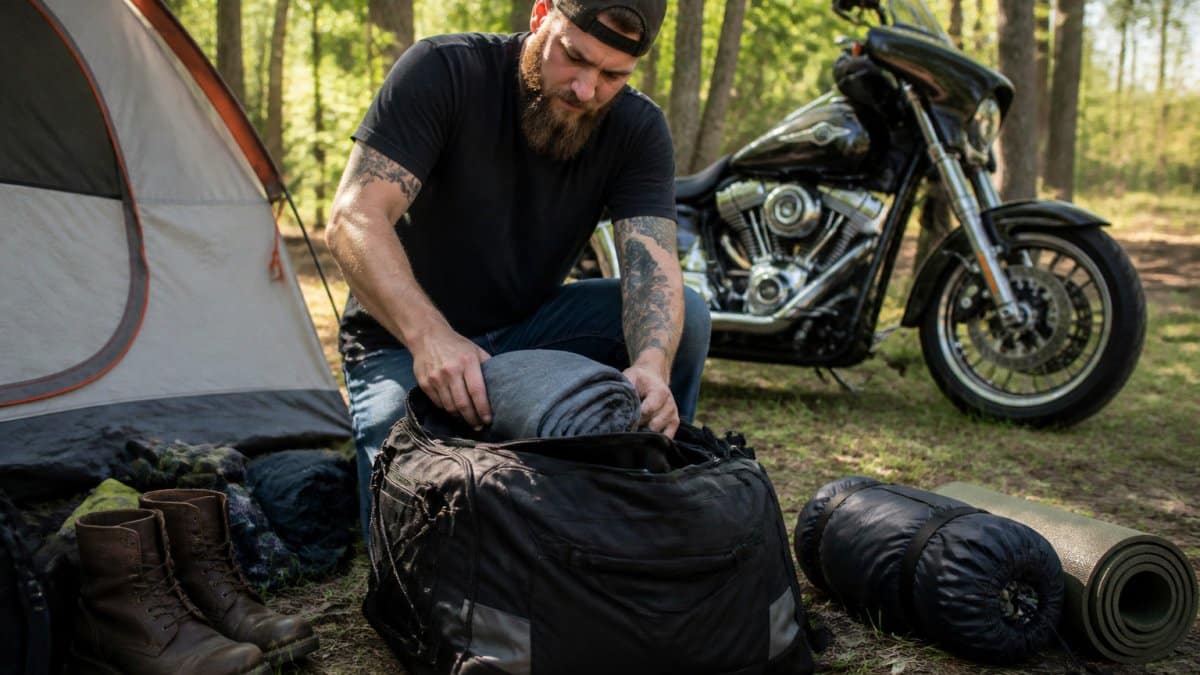
How you load your bags matters as much as what you pack. Roll your clothes instead of folding them to save space. Use compression sacks or a dry bag to keep items compact and dry.
Put heavier items low and close to the center of the bike. Lighter items, like clothing, can go in the outer spaces. Keep things you need during the day, such as rain gear and snacks, in the tank bag or tail bag.
- Roll clothes to fit more into saddlebags
- Use dry bags for anything that must stay dry
- Place heavy items low and centered
Here is a photo of how a rider might secure soft luggage on a touring bike:
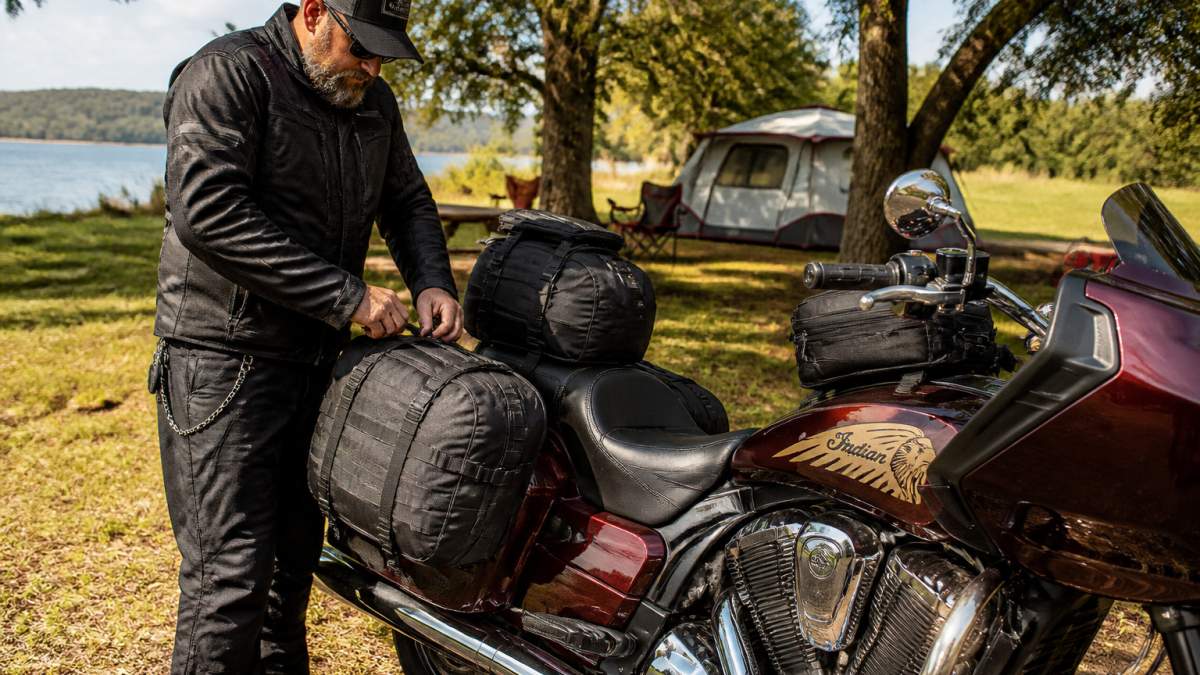
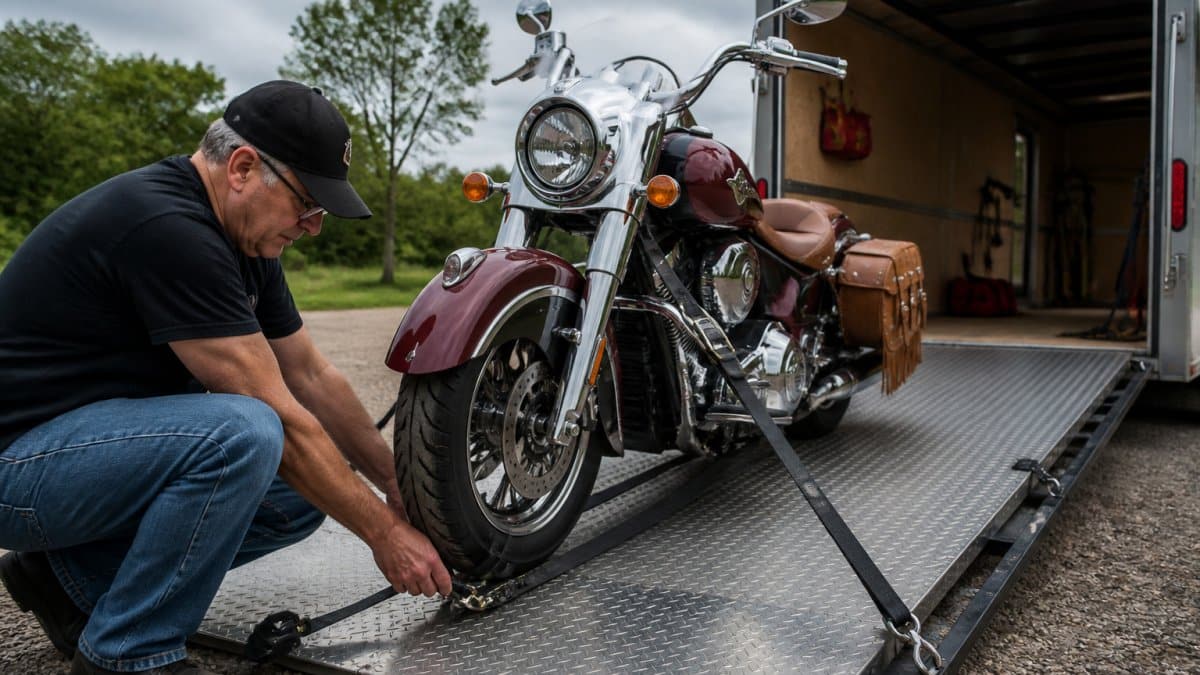
Proper weight distribution remains the most critical factor for stability on the road, though you may eventually need to transport your motorcycle by truck if a mechanical failure or long-distance fatigue makes riding to the rally site impossible.
Load Security, Weight Distribution, and Handling
A load that shifts at speed is the most common cause of a bad day on a rally run. The fix is part packing discipline and part pre-ride check. Here is how to secure a load and confirm the bike still handles.
Secure the load: straps, tension, and loose ends
- Use two straps per bag, not one. A single strap lets a bag pivot; two straps crossed or parallel stop rotation. Cam-lock straps hold tension better than bungee cords, which stretch and lose grip in heat.
- Tension, then re-tension. Pull straps snug, press down on the bag, and tighten again. Straps can loosen as luggage settles, so recheck them early in a ride.
- Tuck every loose end. Cut or fold strap tails and tuck them under the bag or into a pocket. A loose strap end can catch a wheel, chain, or exhaust.
Distribute weight: low, centered, and balanced
- Heavy items low and close to the center of the bike. Tools, liquids, and camp stove go in the bottom of saddlebags or a tail bag, not on top of a tall stack.
- Balance left and right. Weigh or hand-compare the two saddlebags. Even a small difference in weight between the two saddlebags can make the bike pull to one side.
- Keep the tail light. Heavy tail loads behind the rear axle lighten the front end and can make the steering feel vague. Put the heaviest items in saddlebags or a tank bag rather than a tail bag.
- Mind the tank bag. A tall tank bag blocks your view of the instruments and can interfere with steering lock-to-lock. Test full lock before you ride.
Test the handling before you commit
Load the bike, then ride a slow figure-eight in an empty lot and a short stretch at highway speed. For more on preparing your motorcycle for long-distance travel, review the full guidance before you go. You are checking three things: the bike tracks straight with your hands light on the bars, it does not wallow or wobble in a corner, and the front end still feels planted.
If the bike wobbles or weaves at speed after loading, do not try to ride it out. Pull over safely, rebalance the load, and recheck strap tension. Handling problems from a bad load rarely fix themselves.
Finally, know your bike’s rated carrying capacity, it is in the owner’s manual and on the tire placard, and stay under it, including the weight of the rider, passenger, and all luggage combined.
The article’s load-security guidance comes down to a few concrete checks, summarised below.
| Check | Guideline | Why it matters |
|---|---|---|
| Straps per bag | Use two straps, not one | A single strap lets a bag pivot |
| Strap type | Cam-lock over bungee | Bungees stretch and lose grip in heat |
| Strap tension | Tighten, press down, re-tighten | Straps loosen as luggage settles |
| Fuel-stop check | Walk-around at each stop | Catches most problems early |
| Heavy items | Low and close to center | Keeps the bike stable |
| Saddlebag weight | Balance left and right | Uneven load makes the bike pull |
| Tail load | Keep it light | Heavy tail can make steering vague |
| Carrying capacity | Stay under rated limit | Includes rider, passenger and luggage |
Tools, Repair Supplies, and Rally Safety Essentials
A few small tools can save a long day. Pack a basic tool kit, a tire repair kit, duct tape, and extra zip ties. Spare luggage straps are handy when a strap snaps on the road.
Plan for emergencies too. Carry a first aid kit, your registration and insurance papers, and a charged phone with emergency contacts saved. Let someone at home know your route and schedule.
- Basic tool kit and tire repair supplies
- Extra zip ties, bungee cords, and luggage straps
- First aid kit and any personal medications
- Copies of registration and insurance
Your Rally Packing Checklist Before You Ride to New Richmond
Before you leave for the rally, run through one final check. Confirm your riding gear is clean and ready. Make sure your bags are balanced, straps are tight, and your rain gear is easy to reach.
Once you arrive at River’s Edge Campground, you can settle in and enjoy the week. If you still need a site, learn how to book rally camping before you leave. For more practical camping advice to finish your packing and setup, see our latest tips.
Frequently Asked Questions
What should I pack for a motorcycle rally?
Start with riding gear you already wear, then add two to three days of base layers, socks, and underwear, a rain jacket, a compact toiletry kit, and basic tools with tie-downs. Pack versatile items that serve more than one purpose, and leave room in your luggage for souvenirs and event purchases. Riders often overpack clothing, so limit yourself to what fits in your bags with space to spare.
How do you pack clothes on a motorcycle?
Roll clothes rather than folding them, since rolls compress better and wrinkle less. Use compression sacks or dry bags to keep items dry and organized, and place heavier items low and close to the bike’s center. Use shoe space for small items like socks or chargers. Keep frequently needed items in a tank bag or tail bag so you can reach them without unloading everything.
What should I wear to a motorcycle rally?
Wear a full-face helmet, eye protection, full-finger gloves, a jacket with armor, and riding pants with protective padding while riding. Off the bike, choose clean, comfortable clothing that layers well, since weather can change quickly on a long ride. Pack a rain jacket, moisture-wicking base layers, and a warm layer for cool evenings.
What tools should I bring on a motorcycle trip?
Bring a basic tool kit that fits your specific bike, including the sockets and wrenches you need for common adjustments, plus extra luggage straps, strong zip ties, and a tire repair kit or plug kit. Duct tape and a small flashlight are useful for quick fixes. Keep these items in an easy-to-reach bag so you can handle a roadside issue without unpacking your whole load.

0 Comments