
Quick Summary
Motorcycle travel lets families share a journey where everyone feels the road directly, slowing the landscape down so every stop becomes a shared discovery. It also builds bonding through shared weather, fatigue, and views. Weigh the higher risk against these benefits before deciding.
- Motorcycle travel slows the landscape down, so families notice small towns and roadside stops that cars often blur.
- A long shared ride creates conversation that a car ride rarely produces, so plan regular breaks as part of the trip.
- The motorcyclist fatality rate in 2024 was 27 times the passenger-car occupant rate per 100 million vehicle miles.
- Plan daily distance around the youngest passenger’s tolerance, not the rider’s, and schedule breaks before anyone needs them.
- Check your state’s passenger rules and confirm children can reach the footpegs and hold on securely.
Table of Contents
- What Motorcycle Travel Offers Families
- Weighing the Safety Risks Before You Ride
- Planning a Realistic Motorcycle Road Trip With Kids
- Motorcycle Trip Packing List for Families
- Motorcycle Rallies for Families: What to Expect
- Booking Your First Family Ride With Spirit of Indian
- Frequently Asked Questions
What Motorcycle Travel Offers Families
Motorcycle travel gives families something a car rarely can: a shared journey where everyone feels the road directly. The appeal is real, but so are the trade-offs, and this guide covers both so you can decide whether a family ride fits your household.
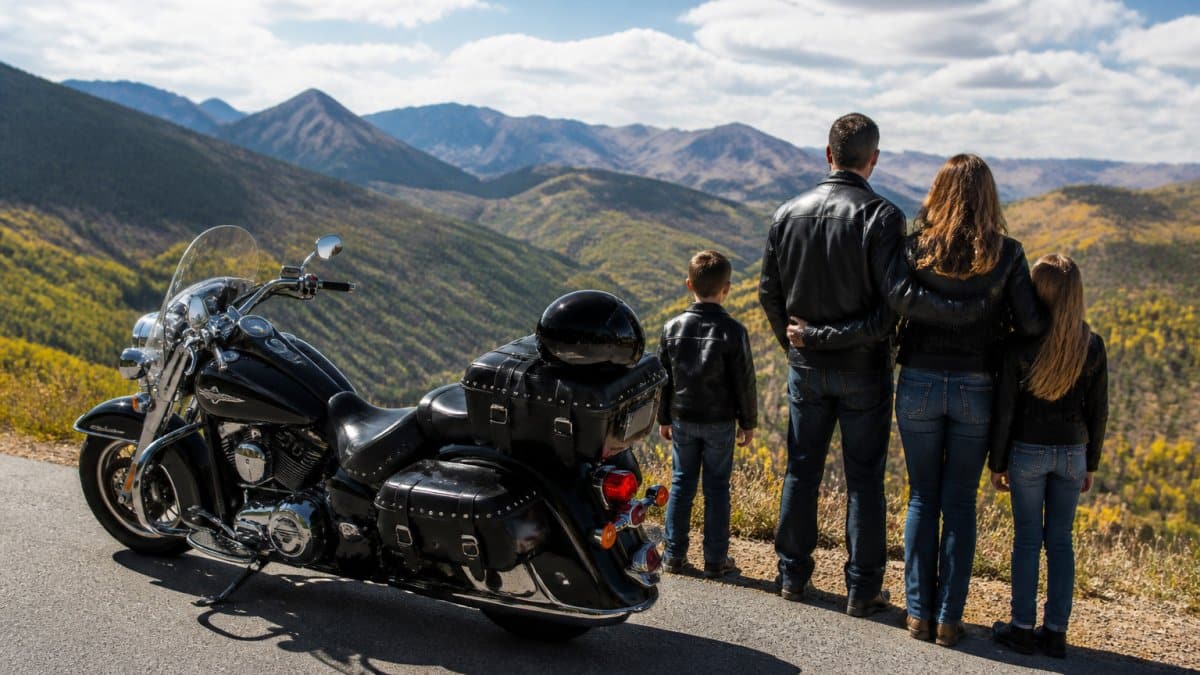
!A family of four with a touring motorcycle and a passenger seated behind the rider, parked at a scenic overlook on a sunny open road
Exploring new places together
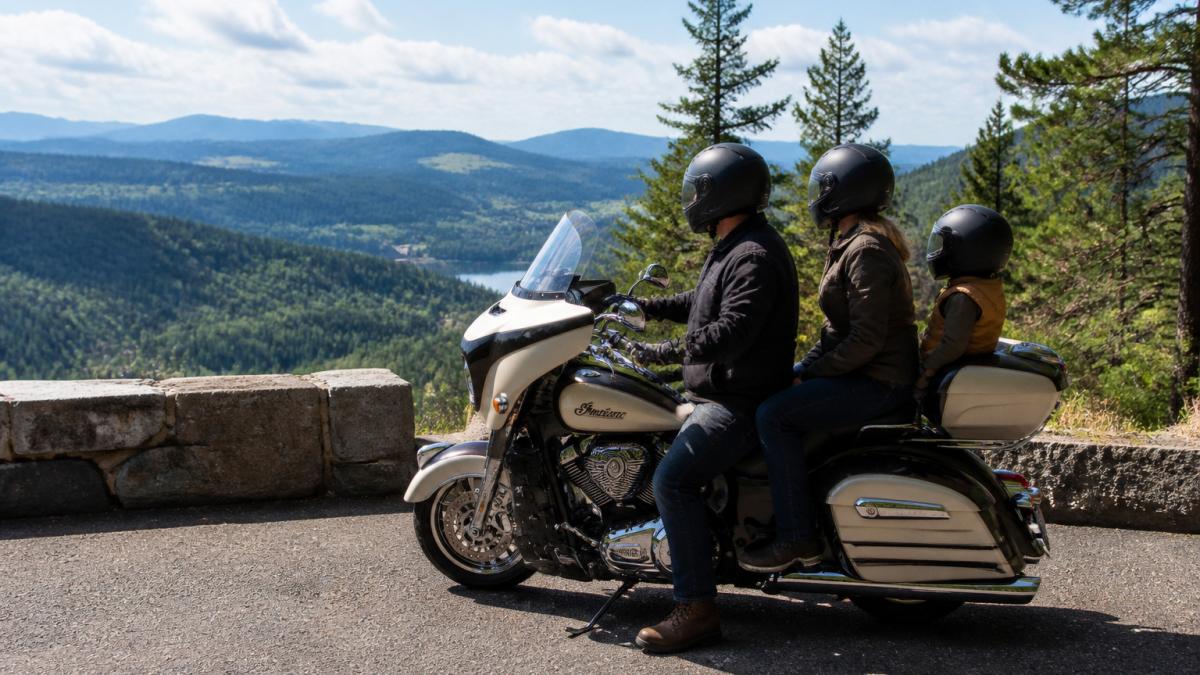
Motorcycle travel slows the landscape down. Riders notice small towns, roadside stops, and changes in terrain that a car window tends to blur. For families, that means every stop becomes a shared discovery. Plan routes around scenic roads and let the group decide which detours are worth the time. Riders who travel in pairs or small groups often find the pace and the stops easier to coordinate than a larger convoy.
Shared experiences and family bonding
A long ride puts everyone in the same weather, the same fatigue, and the same views. That shared physical experience tends to create conversation that a car ride rarely produces. Build in regular breaks so riders and passengers can reset together, and treat those stops as part of the trip rather than interruptions.
Weighing the Safety Risks Before You Ride
Motorcycle travel is meaningfully riskier than travel by car. Per 100 million vehicle miles traveled, the motorcyclist fatality rate in 2024 was 27 times the passenger-car occupant rate (NHTSA motorcycle safety data).
Treat the risk as a planning input. Riders who choose to bring family members should commit to protective gear for everyone, conservative speeds, and routes with lower traffic density.
Age-appropriate passenger rules and requirements
Passenger rules vary by state. Check your state’s motor vehicle code before bringing a child on a motorcycle, and confirm that children can reach the footpegs and hold on securely. Choosing properly fitting safety gear for your child is another step to cover before the ride. Carrying a child who cannot meet these requirements is unsafe.
Planning a Realistic Motorcycle Road Trip With Kids
A family ride succeeds or fails in the planning. The most common mistake is planning mileage around the rider instead of around the youngest passenger. Start with the group’s realistic daily tolerance, then build the route around it. Before departure, review how to prepare your motorcycle for long-distance travel so the bike is ready for the extra load and mileage.
A planning framework you can actually use
Most experienced family riders work backward from four inputs: the youngest passenger’s comfortable time in the saddle, the number of daylight hours, the weather window, and the budget. A practical pattern looks like this:
- Set a daily riding ceiling. Choose a daily distance based on the youngest passenger’s tolerance, and reduce it on mountain routes or for very young children.
- Schedule breaks before anyone needs them. Plan regular short stops along with longer meal and rest breaks. Children tolerate heat, vibration, and helmet time worse than adults, so the break schedule is a safety tool, not a courtesy.
- Build in regular rest days on longer trips. A rest day is also your weather contingency, if a storm front moves in, you already have a buffer day to absorb it.
- Cap the first and last day. Arrival and departure days are often the most stressful, so plan them with lighter mileage.
A sample three-day family itinerary
- Day 1 (arrival, ~90 miles): Short ride to a basecamp or motel, early afternoon arrival, unpack, short walk or swim, early dinner. Purpose: shake out gear and confirm the passenger is comfortable.
- Day 2 (full riding day, ~150 miles): Scenic loop with a mid-morning stop at a roadside attraction, a long lunch, and an early return. No night riding.
- Day 3 (departure, ~90 miles): Reverse route or a shorter direct route home, with one planned stop.
This structure scales up: for a week-long trip, repeat the Day 2 pattern with a rest day inserted after every third riding day.
Weather, fatigue, and emergency contingencies
- Heat: Ride early, plan shorter legs and more shade stops in hot weather; children overheat faster than adults. Carry plenty of water.
- Rain and cold: Waterproof layers for every passenger, not just the rider. A rain delay is cheaper than a hypothermic child.
- Fatigue: The passenger falls asleep before the rider admits fatigue. Treat any drowsiness, dropped conversation, or fidgeting as a signal to stop.
- Breakdowns: Carry a basic tool kit, tire repair supplies, a portable jump starter, and a charged phone with a roadside-assistance plan. Share your route and check-in times with someone not on the trip.
- Emergencies: Know the nearest hospital along each leg and keep a printed list of emergency contacts and insurance information in a waterproof bag.
Costs and budgeting for a family ride
Costs depend on distance, lodging choices, fuel, and how many people travel. Track lodging, food, fuel, and gear separately so you can see where the money goes. Gear, helmets, jackets, gloves, and rain layers sized for each passenger, is a one-time cost that should be budgeted before the trip, not during it. Following a detailed step-by-step guide to planning a motorcycle rally trip can help you organize the logistics around this pacing.
Build the route around the youngest passenger’s tolerance, not the rider’s. A 150-mile day that ends with everyone happy beats a 250-mile day that ends with a meltdown.
Motorcycle Trip Packing List for Families
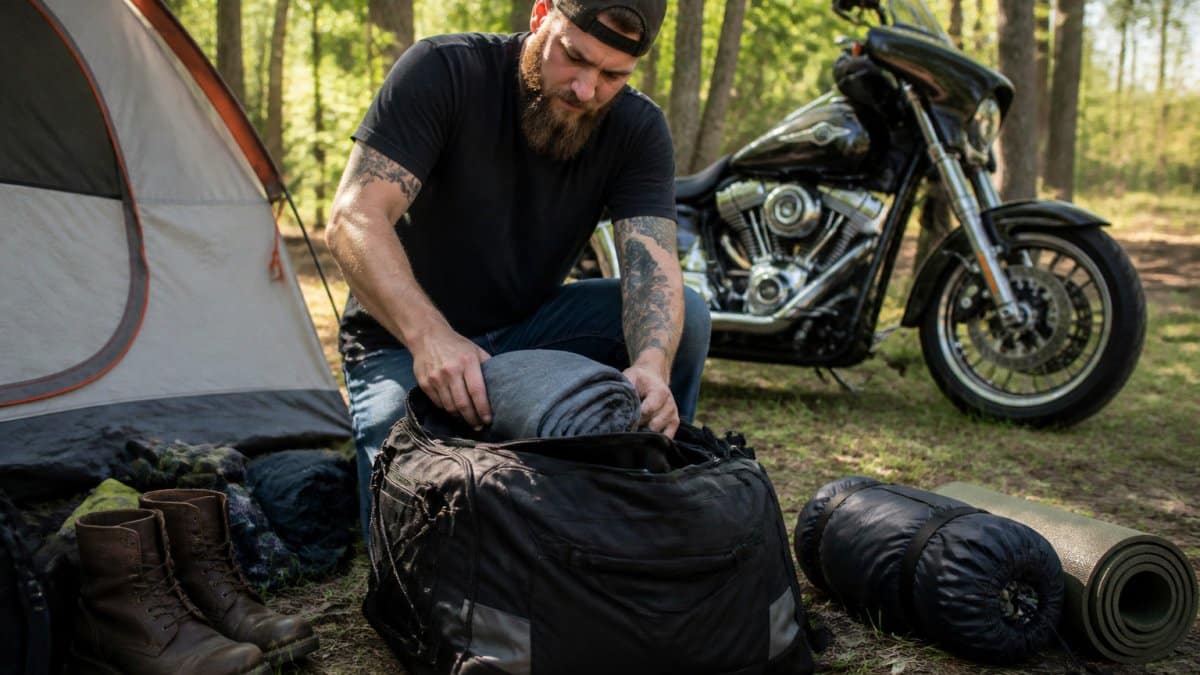
Pack light, and keep weight balanced across the bike. A loaded touring bike with a passenger has a rated gross vehicle weight limit, check your owner’s manual and stay under it. As a rule of thumb, keep heavy items low and centered, and avoid mounting anything high on the tail or tank that could shift in a crosswind.
Passenger and safety gear
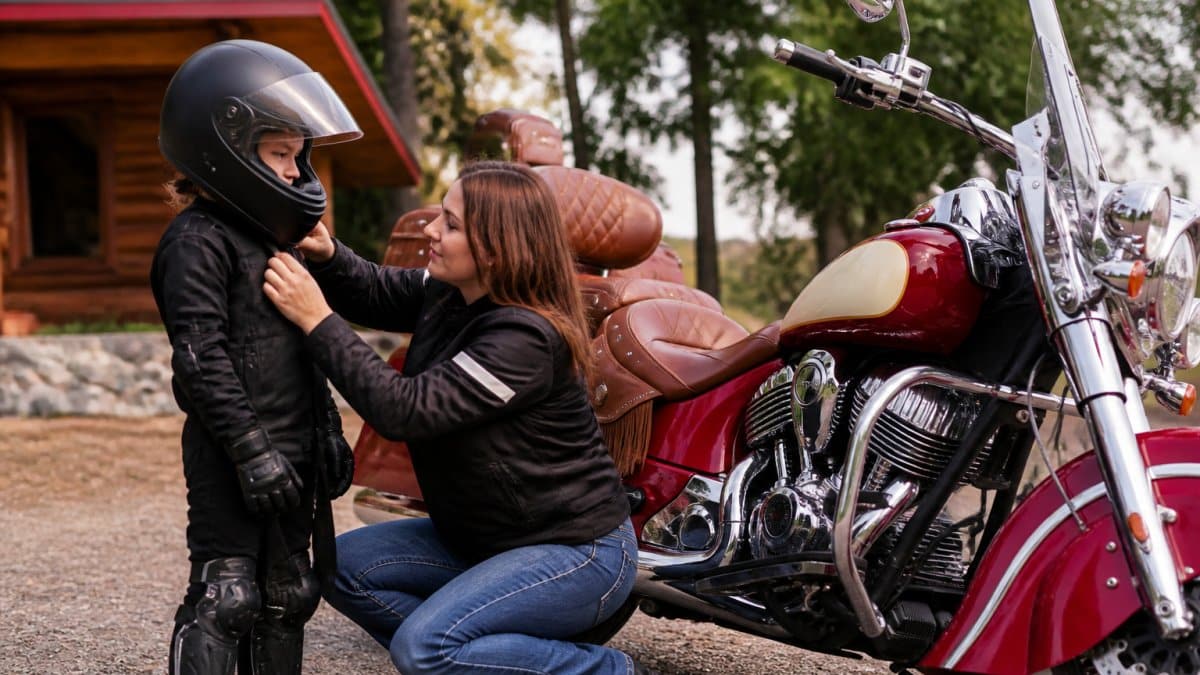
- Helmets sized and fitted for every rider and passenger, a loose helmet is not protection. Children’s helmets should meet the applicable safety standard; check the label.
- Protective jackets, gloves, and over-the-ankle boots for each passenger. Textile gear with armor is the practical family choice.
- Eye protection if the helmet does not have a face shield.
- Rain gear that fits over the protective layers, sized for each passenger.
Comfort and engagement for children
- A communication setup, helmet headsets or a simple intercom, so the passenger can talk to the rider and ask for a stop.
- A small backpack or tank bag with a book, a tablet in a waterproof case, and snacks the child can reach without unclipping.
- Sunscreen, lip balm, and a hat for off-bike stops.
- A light layer for temperature swings; mornings and mountain passes run colder than the valley.
Bike and trip essentials
- A basic tool kit matched to your bike, tire repair supplies, and a portable jump starter.
- A first-aid kit, plus any medications, kept within reach.
- Water and snacks for every passenger, not just the rider.
- Dry bags or waterproof cases for electronics, documents, and spare clothes.
- A printed route sheet and emergency contact list in a waterproof bag, in case phone service drops.
Packing mechanism
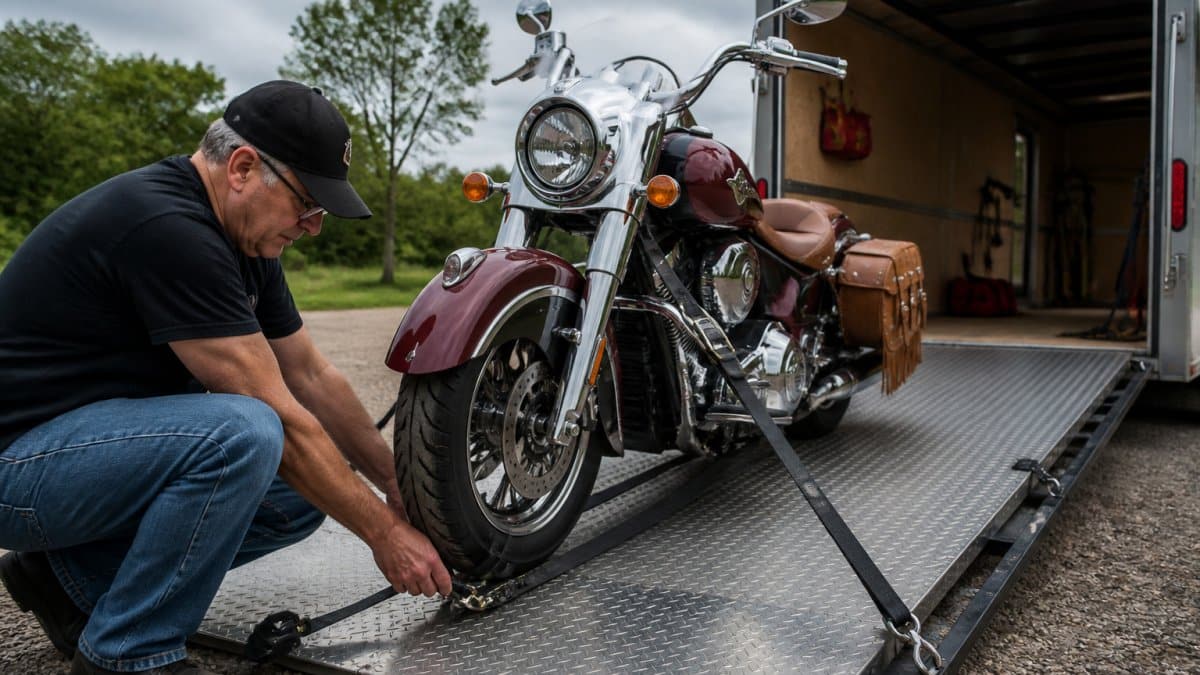
Lay out everything on the floor first, then cut the pile by about a third. Assign each passenger a single bag or dry bag so nothing is lost and weight is distributed predictably. Weigh the loaded bike if you can; many riders are surprised how quickly gear plus a passenger approaches the rated limit. Keep the load within the manufacturer’s rated capacity and avoid heavy items mounted high.
Do not exceed your bike’s gross vehicle weight rating. Overloading affects braking, suspension, and tire wear, and a passenger plus full luggage gets there faster than most families expect.
The packing list breaks down into four groups, each with the gear a family needs before setting off.
| Category | Key items | Note |
|---|---|---|
| Passenger and safety gear | Helmets, protective jackets, gloves, boots | Helmets must fit every rider and passenger |
| Comfort for children | Headset or intercom, backpack, sunscreen, light layer | Passenger can reach snacks without unclipping |
| Bike and trip essentials | Tool kit, tire repair kit, jump starter, first-aid kit | Stay under the bike’s gross vehicle weight limit |
| Packing method | Dry bag per passenger, weigh the loaded bike | Keep heavy items low and centered |
Motorcycle Rallies for Families: What to Expect
Rallies combine riding, camping or lodging, and social events in one place, which makes them a practical option for families. Choosing an event that features on-site tent spaces allows you to integrate essential family camping tips into your trip, ensuring that your children remain comfortable and engaged throughout the weekend.
When you evaluate a rally, check what it offers non-riders, what lodging options exist for children, and how the schedule handles rest days. Learning how to know what to expect at motorcycle rallies can help you compare events before you book.
Booking Your First Family Ride With Spirit of Indian
Spirit of Indian hosts a week-long rally at River’s Edge Campground in New Richmond, Wisconsin, with curated group rides through Wisconsin and Minnesota, live entertainment, and a charity duck race.
If you are planning a first family ride, start with the route, the lodging, and the passenger rules, then book. Our guide to booking camping at Wisconsin rallies covers the reservation process in more detail.
Frequently Asked Questions
Are motorcycles good for long-distance family trips?
Motorcycles can work for long-distance family trips, but they demand more planning than a car. Riders face greater exposure to weather, fatigue and traffic, and motorcycle travel carries substantially higher fatality risk than car travel. Families who plan shorter daily mileage, frequent breaks and experienced riders as drivers generally have a more manageable trip.
What is the best age to ride a motorcycle as a passenger?
Age alone does not settle the question. Passenger eligibility depends on state law, the bike’s passenger equipment, and whether a child can reach the footpegs and hold on securely. Many riders wait until a child is old enough to sit steadily and follow instructions. Check your state’s passenger rules before any trip, and do not carry a child who cannot reach the footpegs or wear a properly fitted helmet.
What safety gear do children need for motorcycle rides?
A properly fitted helmet that meets the applicable safety standard is the baseline. Children also need eye protection, a jacket and long pants made of abrasion-resistant material, over-the-ankle boots, and gloves. Bright colors improve visibility. Gear should fit snugly and be sized for the child, not hand-me-downs that will not protect them in a fall.
How often should a family stop on a motorcycle road trip?
Most families plan regular short stops along with a longer break for a meal. Frequent stops reduce rider fatigue, help children stay comfortable and give you time to check weather, fuel and gear. Build breaks into the daily plan rather than waiting until someone is tired.
What should families pack for a motorcycle trip?
Pack light and use saddlebags or a trunk rated for the load. Essentials include a rain suit for each person, layers for temperature changes, a basic repair kit, a first-aid kit, water, snacks, phone chargers and copies of registration and insurance. Keep heavy items low and centered to protect handling.
What are good family-friendly activities at a motorcycle rally?
Rallies often combine group rides, live entertainment, bike displays and activities that work for non-riders. Spirit of Indian, hosted at River’s Edge Campground in New Richmond, Wisconsin, includes curated rides, live entertainment, a charity duck race and Best in Show competition. For current schedules, lodging options and pricing, check Spirit of Indian’s website or request a quote directly.
Ready to plan your family ride? Join us at Spirit of Indian and see what a week on the open road feels like with people who share your passion for Indian Motorcycles.

0 Comments